
Seeing Dementia Unfold
10 Jul, 2026

Recent News
- Summer Undergrad Internships NOW OPEN
- Four teams awarded seed funding to advance quantum biotechnology research
- QUBIC takes quantum biotechnology across Australia for National Science Week 2026
Dementia: a growing challenge, with limited answers
Dementia is one of Australia’s most pressing health challenges, and the second leading cause of death in Australia. Beyond the statistics lies a deeply personal toll on
individuals, families, carers and communities.
Work underway at QUBIC is opening a new window into dementia, using quantum sensing to observe brain cells in ways that were not previously possible.
Despite decades of dementia research, there is still no cure. Recently approved medications can slow symptoms for some people, but they are not suitable for everyone. Some require regular MRI scans to monitor serious side effects.
While these treatments may slow symptoms for some people, they do not stop or reverse the underlying disease, meaning brain cells continue to be irreversibly lost.
A major challenge in dementia research is understanding how the disease begins and progresses. Scientists typically compare healthy brain cells with diseased ones, looking for differences that might explain why neurons fail and die. However, this approach captures only snapshots of a disease that develops over years or decades, missing how a healthy neuron gradually becomes diseased as damage accumulates. Part of the challenge lies in the limits of existing microscope technology, which offers low-resolution photographs. What’s needed is a high-resolution movie, showing how cells change and interact over time.
Growing the human brain in a dish
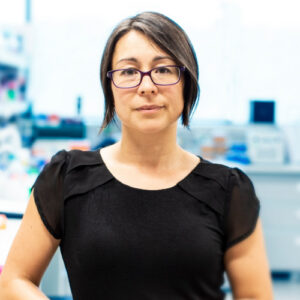
QUBIC Chief Investigator and Deputy Director Professor Lezanne Ooi is working to overcome this barrier. A group leader at the University of Wollongong and Deputy Director of the Molecular Horizons Research Institute, Lezanne leads a research program grounded in cellular neuroscience – the study of how individual brain cells function, communicate and fail.
At the core of her work is a powerful platform technology. Using a small skin sample donated by a patient, Lezanne’s team reprograms those cells into stem cells, and then guides them to become human brain cells grown in a dish.
Crucially, these cells are alive, accessible and measurable, opening new possibilities for understanding disease mechanisms and testing potential therapies, without
needing to sample a patient’s brain tissue.
While dementia is a central focus, Lezanne’s work also spans Parkinson’s disease, motor neuron disease, epilepsy and other rare brain diseases, as well as emerging
questions around genetic and environmental risk factors for neurodegenerative diseases.
Where quantum sensing changes the picture
Advances in quantum sensing are opening new possibilities in biology and medicine, allowing researchers to probe living systems with unprecedented sensitivity.
Quantum sensors are exquisitely sensitive to tiny electrical and magnetic signals — the same signals neurons use to communicate. By integrating quantum sensing with Lezanne’s “brain-in-a-dish” platform, scientists can now follow single neurons, in real time, over extended periods. This makes it possible to see how communication between neurons changes, how damage accumulates, and how disease processes unfold over time – something conventional microscopes cannot do.
By making these processes visible, researchers can begin to understand how neurodegeneration starts, which cellular pathways fail first, and why some neurons are more vulnerable than others. This knowledge opens the door to identifying new targets for treatment or testing potential drugs earlier and more accurately.
Dementia serves as a crucial and immediate focus, but the same quantum-enabled tools can extend to other neurodegenerative diseases and broader biological
processes, including cancer.
A future shaped by earlier, safer intervention
The long-term vision is transformative. By revealing what goes wrong inside neurons, and when, this work has the potential to accelerate drug discovery, and shift treatment toward earlier, more effective intervention. Over time, it could help move dementia care away from symptom management and toward protecting brain health before irreversible damage occurs.
Through QUBIC, quantum sensing is no longer an abstract promise. It is becoming a practical tool—one that allows scientists to watch the living human brain at work, cell by cell, and bring new clarity to one of society’s greatest medical challenges.
An extract from the 2025 QUBIC Annual Report. Read the full report here.