Bridging Quantum and the Classroom at ConASTA 2026
17 Jul, 2026
Recent News
- QUBIC takes quantum biotechnology across Australia for National Science Week 2026
- Philanthropic donation accelerates cutting-edge Parkinson’s disease research at the University of Wollongong
- Brainwave Seed Funding
Quantum technologies are rapidly moving from the lab into the real world, helping tackle challenges across the life sciences. Researchers are developing new ways to detect disease, image biological systems and understand the building blocks of life by bringing together physicists, biologists, neuroscientists, chemists and engineers to solve problems that no single discipline can address alone.
Yet for most young people, their first introduction to quantum won’t come from a scientist. It will come from a teacher. So how do we turn complex, cutting-edge research into something that sparks curiosity, feels relevant, and helps students imagine themselves as part of the future?
That question sat at the heart of QUBIC’s involvement at ConASTA 2026, Australia’s largest science education conference, where we connected with educators from across the country who are finding new ways to bring contemporary science into the classroom.
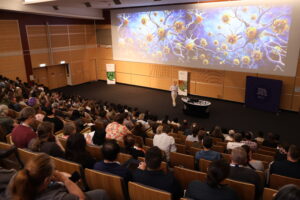
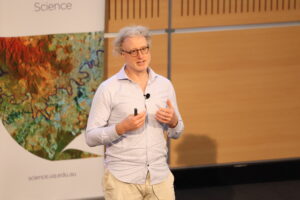
Throughout the week, we explored how quantum science can be connected to topics students already care about. In his keynote, Bringing Quantum to Life, QUBIC Director Professor Warwick Bowen demonstrated how quantum technologies are moving beyond theory and into real-world applications, from understanding disease to developing new tools for healthcare and biology. One example that resonated strongly with attendees was the potential for quantum technologies to support earlier detection of conditions such as sepsis, highlighting how advances in physics may one day help improve outcomes for patients and families.
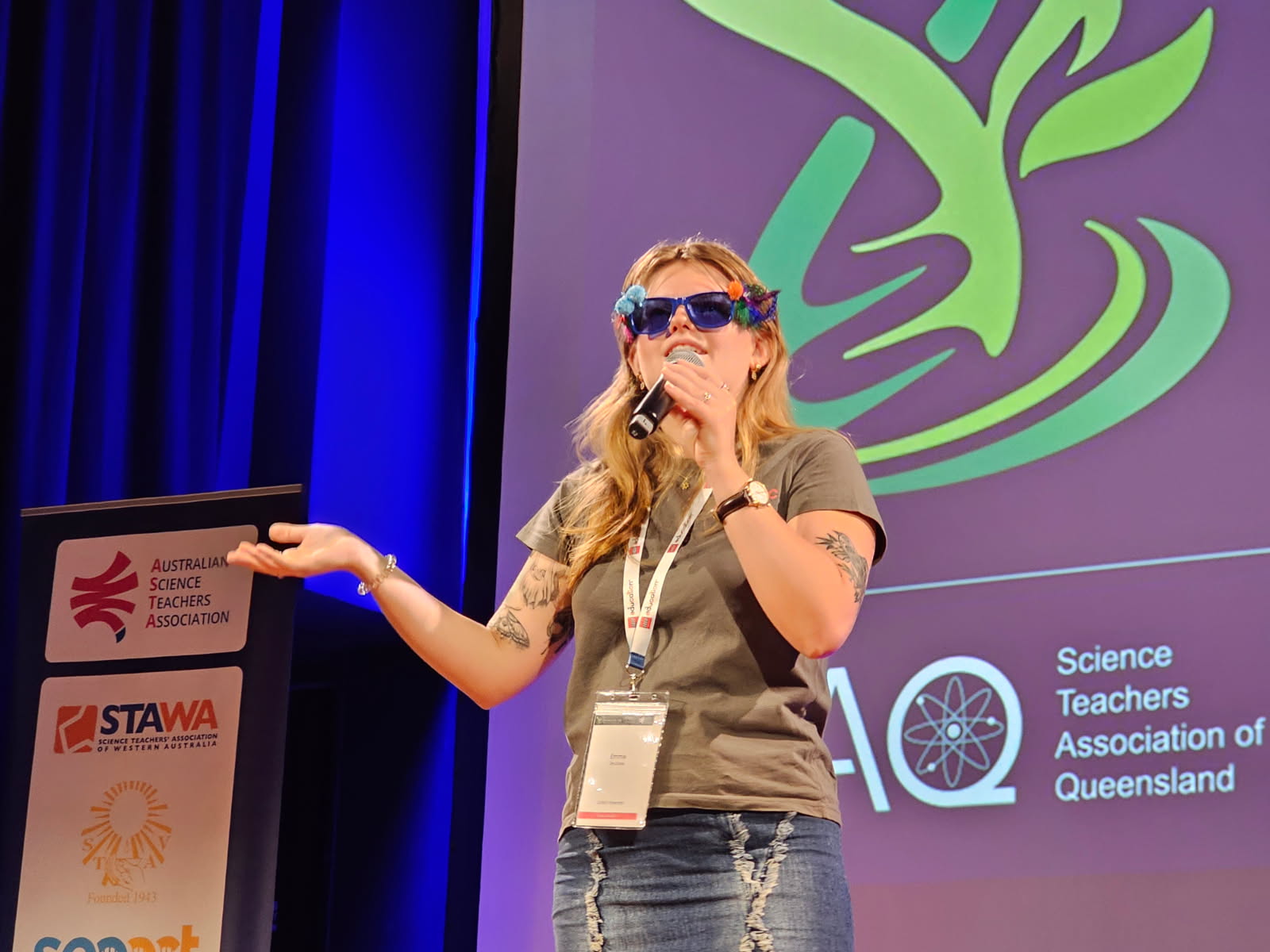
University of Wollongong PhD student Emma De Costa approached the challenge from a different angle. Through Seeing Quantum: Mystery Migration, she presented the theory around the remarkable navigation abilities of the European robin to introduce educators to the emerging field of quantum biology. By combining storytelling with a classroom-ready activity, the session demonstrated how concepts such as electron spin, light interactions and magnetoreception can be transformed into fun and engaging learning experiences for students.
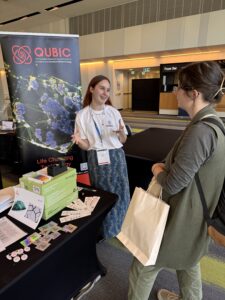
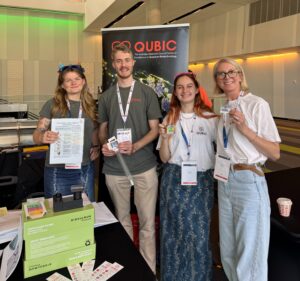
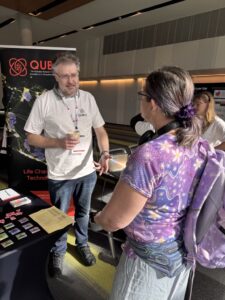
Beyond the presentations, rewarding conversations took place at the QUBIC exhibition booth. Teachers shared their enthusiasm for bringing emerging science into the classroom, while also discussing the challenge of making complex ideas accessible and relevant for students.
ConASTA was an opportunity to listen, learn and build relationships with educators who introduce many young Australians to science’s newest ideas. By supporting teacher participation, sharing classroom-ready resources and creating opportunities for researchers and educators to connect, we’re bringing quantum science out of the lab and into conversations that spark curiosity, encourage questions and help students see themselves in the future of science.
If you’re interested in connecting with QUBIC to explore ways to bring quantum science into the classroom, we’d love to continue the conversation.
QUBIC would like to thank everyone who contributed to our involvement in ConASTA 2026, including Professor Warwick Bowen, Emma De Costa, Mark Watson, Alex Stilgoe, Eleanor Trimby, Galya Haim, David Simpson and Kath Pearson, who helped plan and deliver our activities and engaged with educators from across Australia throughout the week. We also thank the many teachers who shared their ideas, experiences and enthusiasm for bringing quantum science into the classroom.