
Reading biology in many dimensions
25 Jun, 2026
Recent News
- Summer Undergrad Internships NOW OPEN
- Four teams awarded seed funding to advance quantum biotechnology research
- QUBIC takes quantum biotechnology across Australia for National Science Week 2026
How mixOmics, an open-source framework turns the complexity of multi-omics data into biological insight – from dairy farms to coral reefs to the clinic.
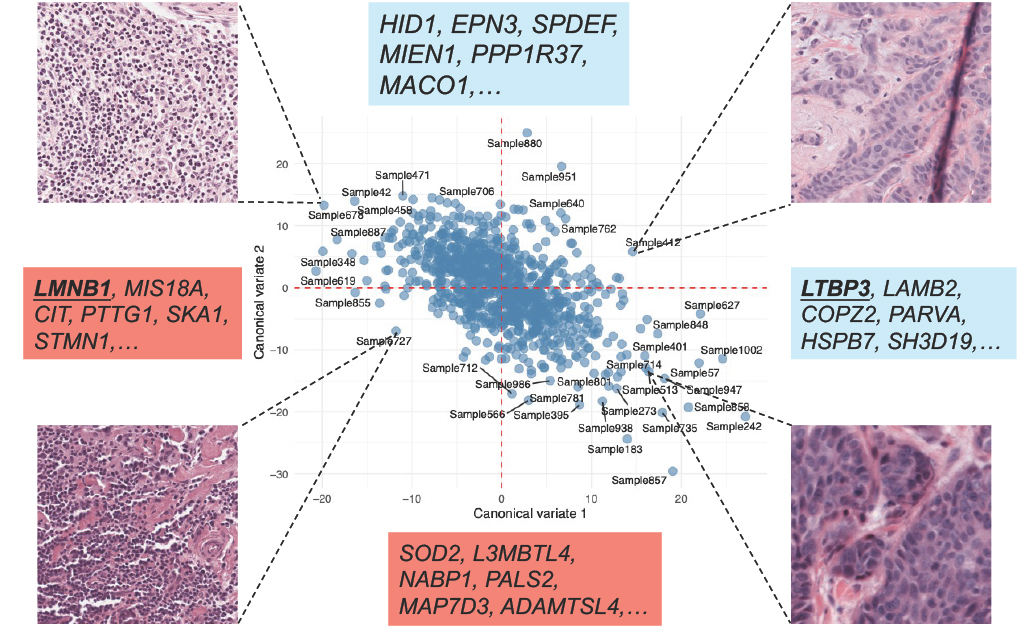
A paradox sits at the heart of modern biology. A single tissue sample can now yield measurements on tens of thousands of genes, proteins, metabolites and microbes. And yet, the more we measure, the harder it becomes to draw meaning from the data. Conventional statistics were never designed for datasets where biological variables outnumber observations by orders of magnitude, and where the signal of interest sits inside vast and correlated noise. The bottleneck in modern life science is no longer measurement but interpretation.
Modern biological science is defined by data, but much of that data is too complex to analyse using conventional statistical tools.
Advances in genomics, proteomics, metabolomics, microbiome analysis and single-cell technologies allow researchers to measure tens of thousands of biological variables from a single sample.
While this has transformed what can be observed, it has also created a major analytical bottleneck.
Traditional statistical methods struggle with these ‘high-dimension, low-sample-size’ datasets, where the number of variables (omics features) far exceeds the number of observations and where meaningful biological signals are embedded within large, highly correlated and noisy measurements.
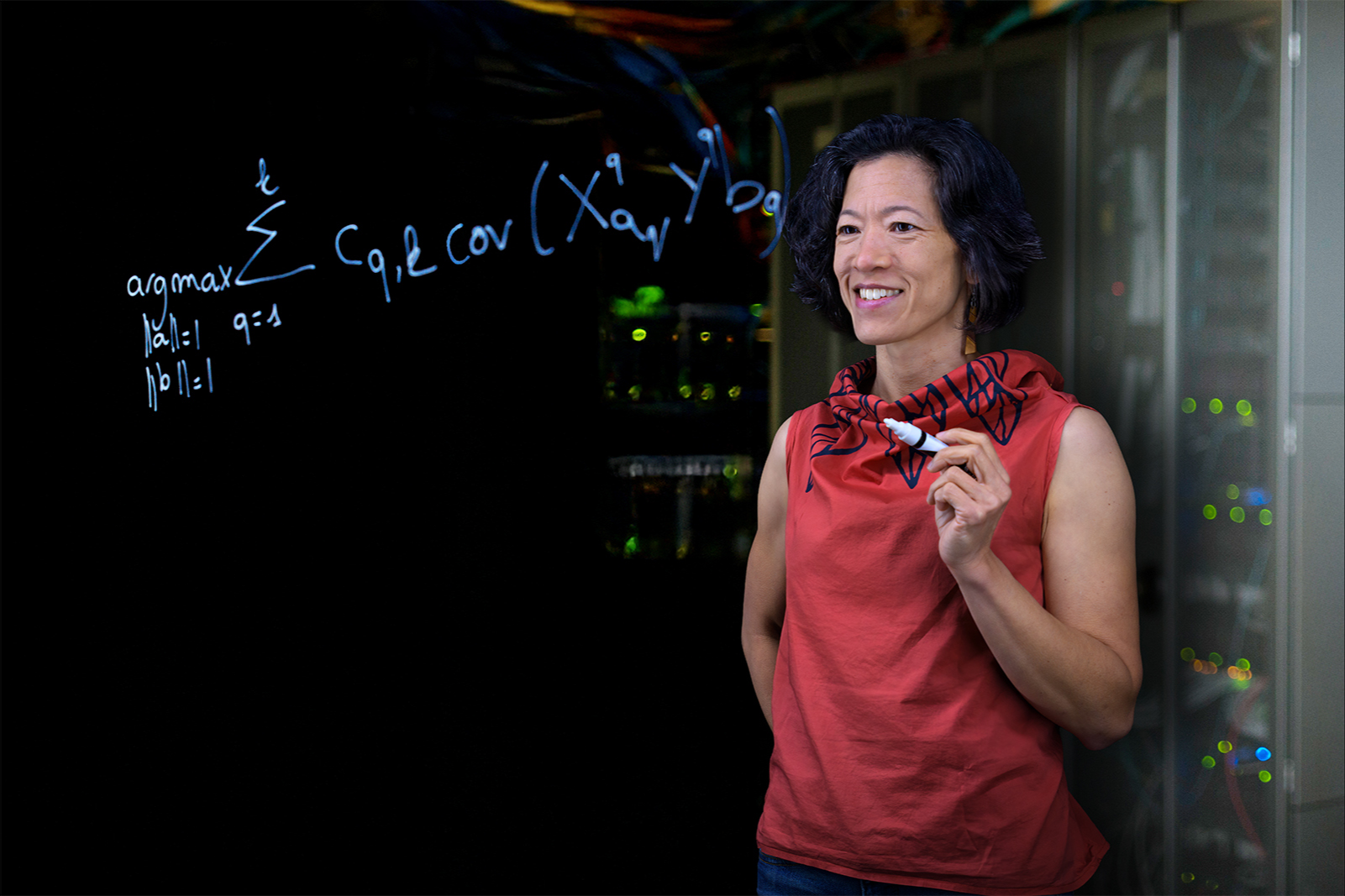
Prof Kim-Anh Lê Cao has spent more than a decade developing mixOmics to address this problem. The open-source suite brings together genes, proteins, metabolites, microbes and other ‘omics’ measurements within a single analytical framework, so that researchers can analyse them jointly rather than one layer at a time.
‘mixOmics methods give a holistic view of biological systems by integrating several layers of molecular information simultaneously, and identifying key molecular drivers in these complex systems,’ says Prof Lê Cao.
The impact of this capability is demonstrated through its application to real-world challenges across all life science.
- In Australia’s dairy industry, mixOmics has been used to analyse complex milk metabolite profiles and to develop predictive models of cow fertility, underpinning more targeted breeding strategies, improved farm productivity and sustainability.
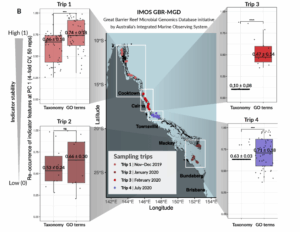
- In environmental science, the Australian Institute of Marine Science applied mixOmics to integrate data from multiple Great Barrier Reef monitoring campaigns, enabling identification of microbial functional signatures that reliably predict water chemistry, providing a more sensitive framework for assessing reef health.
- In human health, mixOmics supported integration of microbiome and metabolomic data to distinguish patients with chronic obstructive pulmonary disease, and to investigate disease susceptibility in a range of clinical contexts.
Across all these domains, the common outcome is not simply improved statistical performance, but the ability to turn previously intractable datasets into actionable biological insight.
MixOmics is currently being used by a large international research community of 50,000 users a year and its 13 methods developed by Prof Lê Cao and her team are widely cited and embedded in both academic and industrial research pipelines (9,000+ citations and 160+ patents using mixOmics).
Within QUBIC, mixOmics represents an enabling platform rather than a quantum technology in itself.
As quantum imaging and sensing systems begin to generate new forms of high-dimensional biological data, the analytical challenges they create will be similar in scale and complexity to those already addressed by mixOmics.
The established capability of the mixOmics platform positions QUBIC to interpret, integrate and translate quantum-derived biological information, supporting evidence-based decision-making and real-world impact as quantum-biotechnology matures.
The second generation of mixOmics, mixOmics PRO, has been registered as a company to further accelerate discoveries in omics life sciences.
- visit the Lê Cao Lab
- visit mixOmics
- visit mixOmics PRO
- visit Melbourne Integrative Genomics (where Lê Cao lab is based)
QUBIC technologies are expected to generate complex data at the molecule, cell and tissue level with unprecedented time resolution. Methods such as those developed in mixOmics will extract insightful information from these different but complementary techniques from quantum sensors to sequencing experiments.
Feature image: Professor Kim-Anh Lê Cao. Credit: Mike Rennie Creative