Reading biology in many dimensions

How mixOmics, an open-source framework turns the complexity of multi-omics data into biological insight – from dairy farms to coral reefs to the clinic.

images from scientific paper
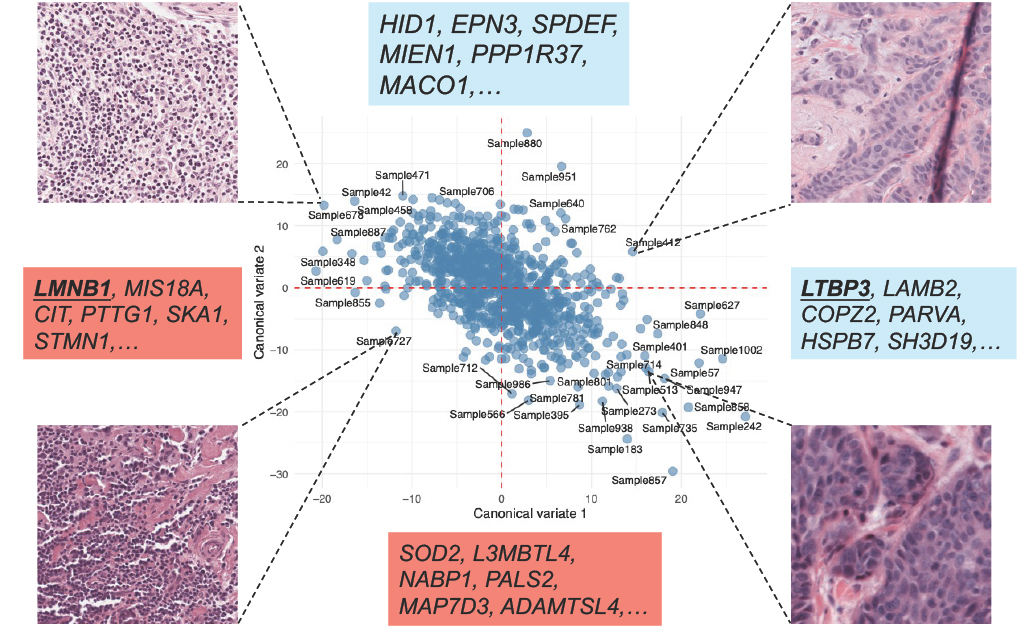
Integrating breast cancer tissue imaging and gene expression towards earlier disease diagnosis and individual treatments

A paradox sits at the heart of modern biology. A single tissue sample can now yield measurements on tens of thousands of genes, proteins, metabolites and microbes. And yet, the more we measure, the harder it becomes to draw meaning from the data. Conventional statistics were never designed for datasets where biological variables outnumber observations by orders of magnitude, and where the signal of interest sits inside vast and correlated noise. The bottleneck in modern life science is no longer measurement but interpretation.

Modern biological science is defined by data, but much of that data is too complex to analyse using conventional statistical tools.

Advances in genomics, proteomics, metabolomics, microbiome analysis and single-cell technologies allow researchers to measure tens of thousands of biological variables from a single sample.

While this has transformed what can be observed, it has also created a major analytical bottleneck.

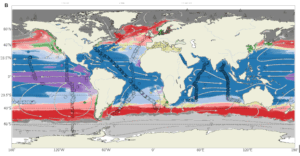
Mapping global picoplankton biogeography

Traditional statistical methods struggle with these ‘high-dimension, low-sample-size’ datasets, where the number of variables (omics features) far exceeds the number of observations and where meaningful biological signals are embedded within large, highly correlated and noisy measurements.

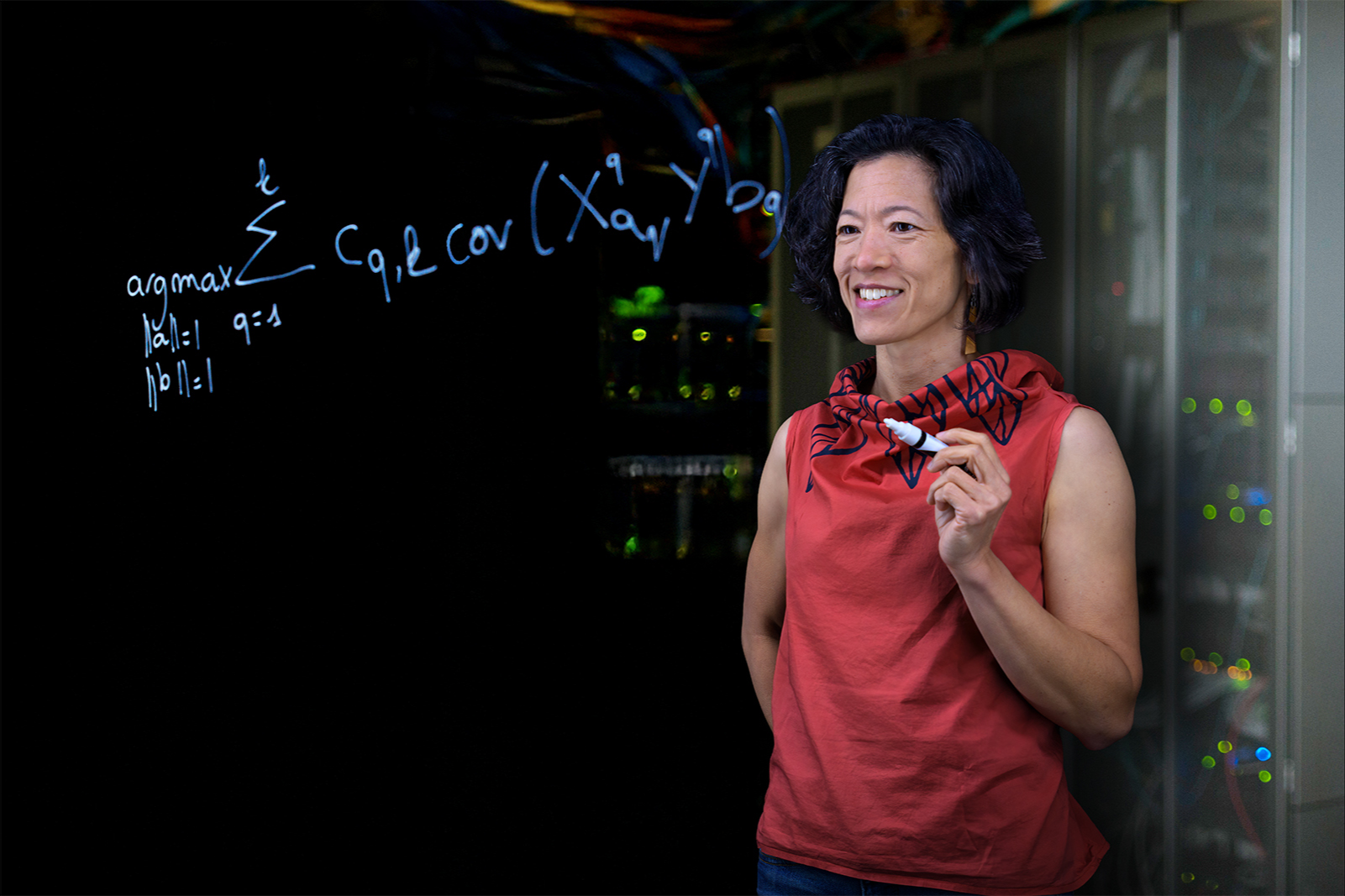
Prof Kim-Anh Lê Cao has spent more than a decade developing mixOmics to address this problem. The open-source suite brings together genes, proteins, metabolites, microbes and other ‘omics’ measurements within a single analytical framework, so that researchers can analyse them jointly rather than one layer at a time.

‘mixOmics methods give a holistic view of biological systems by integrating several layers of molecular information simultaneously, and identifying key molecular drivers in these complex systems,’ says Prof Lê Cao.

The impact of this capability is demonstrated through its application to real-world challenges across all life science.

  • In Australia’s dairy industry, mixOmics has been used to analyse complex milk metabolite profiles and to develop predictive models of cow fertility, underpinning more targeted breeding strategies, improved farm productivity and sustainability.
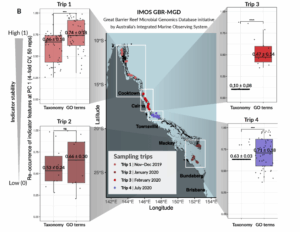
  • In environmental science, the Australian Institute of Marine Science applied mixOmics to integrate data from multiple Great Barrier Reef monitoring campaigns, enabling identification of microbial functional signatures that reliably predict water chemistry, providing a more sensitive framework for assessing reef health.
  • In human health, mixOmics supported integration of microbiome and metabolomic data to distinguish patients with chronic obstructive pulmonary disease, and to investigate disease susceptibility in a range of clinical contexts.
image of seawater analysis
mixOmics analysis accommodating seawater variation across different seasons

Across all these domains, the common outcome is not simply improved statistical performance, but the ability to turn previously intractable datasets into actionable biological insight.

MixOmics is currently being used by a large international research community of 50,000 users a year and its 13 methods developed by Prof Lê Cao and her team are widely cited and embedded in both academic and industrial research pipelines (9,000+ citations and 160+ patents using mixOmics).

Within QUBIC, mixOmics represents an enabling platform rather than a quantum technology in itself.

As quantum imaging and sensing systems begin to generate new forms of high-dimensional biological data, the analytical challenges they create will be similar in scale and complexity to those already addressed by mixOmics.

The established capability of the mixOmics platform positions QUBIC to interpret, integrate and translate quantum-derived biological information, supporting evidence-based decision-making and real-world impact as quantum-biotechnology matures.

The second generation of mixOmics, mixOmics PRO, has been registered as a company to further accelerate discoveries in omics life sciences.

QUBIC technologies are expected to generate complex data at the molecule, cell and tissue level with unprecedented time resolution. Methods such as those developed in mixOmics will extract insightful information from these different but complementary techniques from quantum sensors to sequencing experiments.

Feature image: Professor Kim-Anh Lê Cao. Credit: Mike Rennie Creative

Seeing and Controlling the Molecular Engines of Life

Imagine a future where medical treatments are more responsive, biological systems are easier to control, and disease can be detected earlier and more precisely. Reaching this future depends on understanding how life organises itself at the most fundamental, molecular level and how those processes might be guided or redesigned.

Many of the processes that sustain life occur at time and length scales far beyond what we can see. At the molecular scale, living systems organise themselves dynamically, forming temporary structures that control how cells function, adapt and respond to their environment. Understanding this hidden layer of organisation is essential for developing more effective therapies, diagnostics and biotechnologies.

Biomolecular condensates are emerging as a unifying framework for understanding and eventually shaping this molecular organisation.

Biomolecular condensates are dynamic, membrane‑less compartments that form when proteins and nucleic acids self‑assemble inside cells. Rather than being enclosed by physical boundaries, these structures arise through collective molecular interactions, allowing cells to concentrate and regulate biological activity with
remarkable flexibility.

Biomolecular condensates play a central role in organising life at the molecular level. They help regulate gene expression, coordinate biochemical reactions and
enable cells to respond rapidly to change. The same properties that make biomolecular condensates powerful biological tools also place them beyond the reach of many existing techniques.

Condensates are small, highly dynamic and governed by subtle molecular forces. Small changes in their composition or environment can significantly alter
their behaviour. In healthy systems, this adaptability is essential. In disease, however, condensates can become disrupted, contributing to conditions such as
neurodegeneration and cancer.

Understanding how condensates form and function, and how they might be controlled, requires new ways to measure molecular interactions with exceptional sensitivity.

Where quantum biotechnology enters the picture

Many of the key processes within biomolecular condensates occur at the nanoscale, where classical measurement tools struggle to capture weak and transient interactions. This is precisely the regime where quantum technologies offer new opportunities.

Ultra‑sensitive quantum sensors, advanced spectroscopic techniques and quantum‑informed simulations provide new ways to probe molecular organisation and dynamics. When combined with experimental platforms in molecular and cellular biology, these tools are allowing QUBIC researchers to characterise condensates with unprecedented precision.

QUBIC provides the environment where these capabilities come together, linking quantum science with biological experimentation and theory.

From insight to application

By learning how to control the formation and properties of biomolecular condensates, researchers could design programmable biomaterials with applications across
health and biotechnology, including:

  • Smarter drug delivery systems that respond dynamically to their environment
  • Synthetic bioreactors that organise complex reactions without rigid boundaries
  • New diagnostic platforms that exploit condensate sensitivity to molecular change

These possibilities show how quantum biotechnology extends beyond measurement, opening pathways to designing and engineering living matter itself.

A unique capability at the molecular frontier

Biomolecular condensates sit squarely within QUBIC’s mission to apply quantum technologies where biological complexity is greatest and new tools are most needed. By uniting researchers across institutions and research themes, the centre connects fundamental molecular insight directly to biological relevance.

This work positions QUBIC to drive future advances in healthcare, diagnostics and biotechnology by revealing how life organises itself at the molecular scale and turning that understanding into capability.

A centre‑wide effort across themes

In 2025, researchers from three QUBIC nodes (University of Wollongong, The University of Queensland, and University of Technology Sydney) published a major review in Advanced Materials: Biomolecular Condensates as Emerging Biomaterials: Functional Mechanisms and Advances in Computational and Experimental Approaches. Spanning the Molecules, Cells and Brain themes, the review integrates expertise in molecular physics, chemistry, biology and computation to examine biomolecular condensates from multiple perspectives. It brings together advances in experimental techniques and computational modelling to reveal the physical principles that govern condensate behaviour, and to explore how these systems could be developed as a new class of functional biomaterials.

This is precisely the kind of problem QUBIC exists to solve, because progress depends on integrating physics, chemistry, biology and computation in ways
that individual disciplines, projects or institutions cannot achieve alone.

Read more about QUBIC’s Molecules theme

An extract from the 2025 QUBIC Annual Report. Read the full report here.

Applying Quantum to the Brain Frontier

QUBIC CI Professor Marta Garrido brings expertise and infrastructure to enable next-generation quantum-enabled brain measurement.

The appointment of Professor Marta Garrido to QUBIC in 2025 marks a significant step in expanding the Centre’s multidisciplinary capability and strengthening its leadership in quantum-enabled biotechnology.

Her expertise in neuroscience and computational modelling brings new capability at the intersection of physics, engineering and biological research, supporting QUBIC’s future work in quantum-enabled human brain imaging.

Professor Garrido’s research combines brain imaging techniques and computational modelling to understand how the brain learns from experience and makes decisions in both typical individuals and people with psychiatric disorders. Her work uses methods including magnetoencephalography (MEG), electroencephalography (EEG), and magnetic resonance imaging (MRI) to study brain activity and neural circuitry. This research focuses on understanding the biological basis of brain function and psychiatric conditions, including disrupted predictive processes and brain circuitry.

Professor Garrido significantly expands QUBIC’s capability in magnetoencephalography.

She brings more than twenty years of experience in MEG data acquisition, analysis and brain connectivity modelling. In 2024, she established the first purpose-built whole- head, room-temperature MEG facility in the southern hemisphere at the University of Melbourne through an ARC LIEF grant. The facility uses wearable optically pumped magnetometers (OPMs) – 50 highly sensitive quantum magnetic field detectors – to measure extremely weak magnetic signals generated by brain activity. These sensors can be positioned flexibly on the head and allow recordings during more ‘natural’ experimental conditions where people can freely move.

This facility provides infrastructure to support QUBIC’s research in quantum-enabled neural imaging. In 2025, the University of Queensland also committed $1.6M to establish an R&D facility for quantum MEG. These two facilities combined means QUBIC has the southern hemisphere’s only room-temperature MEG facilities. Professor Garrido’s work contributes to informing the development of quantum sensors for MEG, benchmarking emerging sensing technologies including rubidium, diamond and optomechanical systems, and validating new approaches to non-invasive brain measurement. Her expertise in MEG data acquisition and analysis supports the development and testing of sensing technologies under development within QUBIC and contributes to research on brain connectivity and neural activity.

Her appointment also supports collaboration across QUBIC nodes. Project funding associated with this work enables the appointment of a postdoctoral research fellow in whole-brain MEG and will support MEG research at the University of Melbourne, University of Wollongong and The University of Queensland. Professor Garrido also brings experience in mentoring researchers, supporting training and development programs, established industry connections, and from 2026 will lead the QUBIC’s Outreach & Engagement portfolio.

Professor Garrido’s appointment strengthens QUBIC’s capacity to integrate quantum sensing technologies with biological and clinical research, expanding the Centre’s multidisciplinary capability and supporting collaboration across its research nodes. By contributing new infrastructure, technical expertise and research networks, her appointment enhances QUBIC’s ability to develop and apply quantum technologies for brain measurement and builds the foundation for future research and partnerships.


An extract from the 2025 QUBIC Annual Report. Read the full report here.