QUBIC takes quantum biotechnology across Australia for National Science Week 2026

National Science Week is Australia’s annual celebration of science and technology, and this year QUBIC was proud to take quantum biotechnology on the road, into schools, onto the airwaves, and out into communities across the country.

Over the course of the week, more than a dozen QUBIC researchers shared their knowledge and passion for science with students, teachers, industry leaders, policymakers and the public through school visits, workshops, public talks, radio interviews, festivals and community events.

From Tasmania to Queensland, researchers sparked curiosity, encouraged conversation and showcased how quantum technologies are helping address some of society’s most pressing challenges across health, agriculture and energy.

Taking quantum science on the road

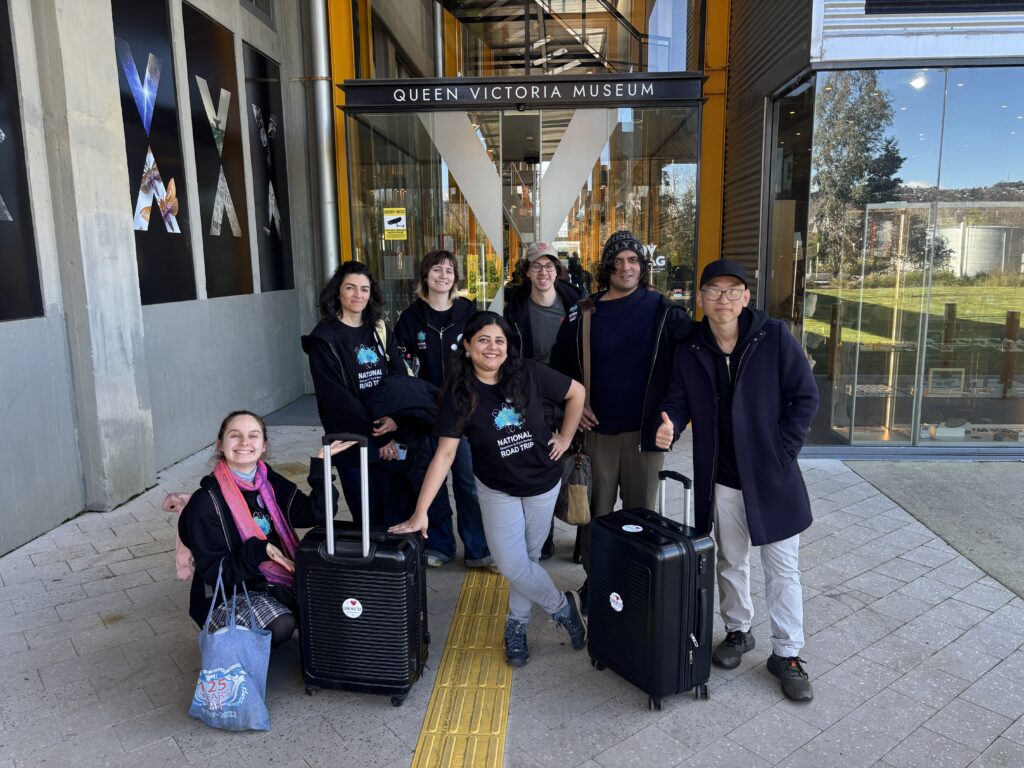
A major highlight this year was our involvement in the National Quantum & Dark Matter Road Trip, which celebrated its fifth year in 2026.

The road trip, co-organised with the ARC Centre of Excellence for Dark Matter Particle Physics and supported by the Australian Institute of Physics, aims to inspire the next generation of scientists and engineers while showcasing the exciting possibilities of quantum technologies and dark matter research.

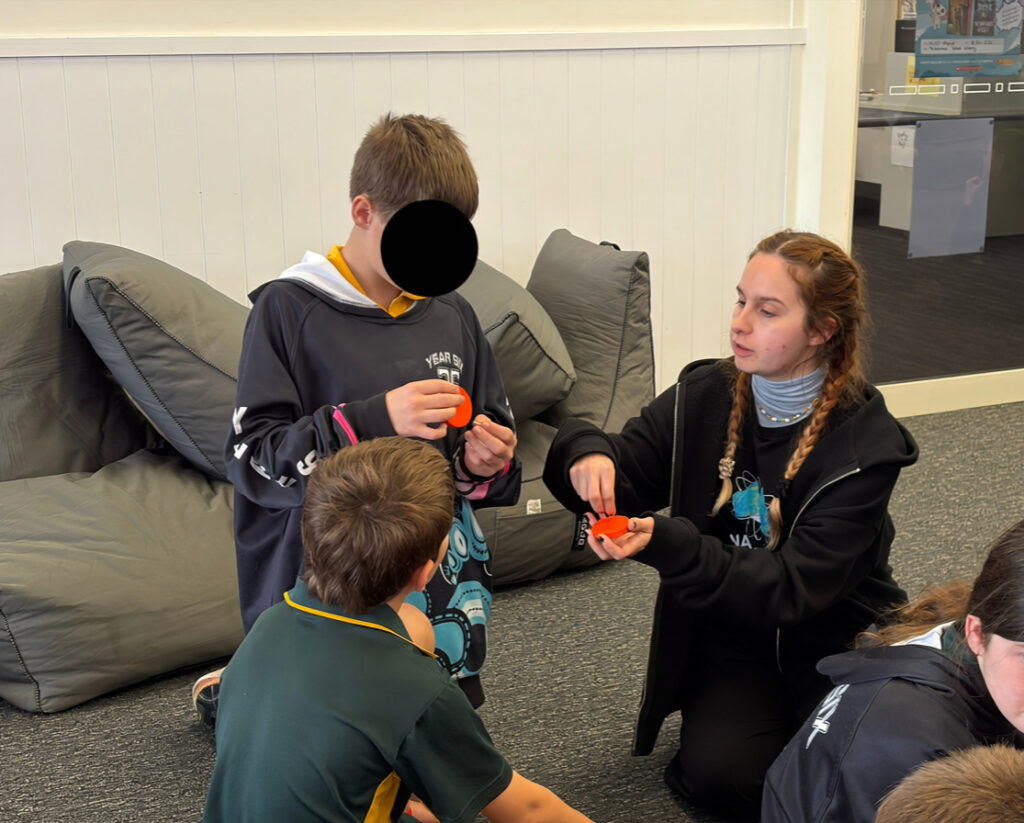
From 14 to 22 August, QUBIC and Dark Matter researchers Eleanor Trimby, Michael Jones, Galya Haim, Amelie Read, Ethan Han, Amrita Banerjee, Maaz Hayat and Robert James travelled across Tasmania, visiting schools and communities with interactive demonstrations, hands-on activities, talks and quizzes designed to engage audiences with cutting-edge science.

The road trip reached students and community members across the state, creating opportunities for young people to meet scientists, ask questions and explore future pathways in STEM.

Bringing quantum biotechnology to communities nationwide

Beyond Tasmania, QUBIC researchers participated in an exciting program of events across Brisbane, Melbourne, Sydney, Perth and Wollongong.

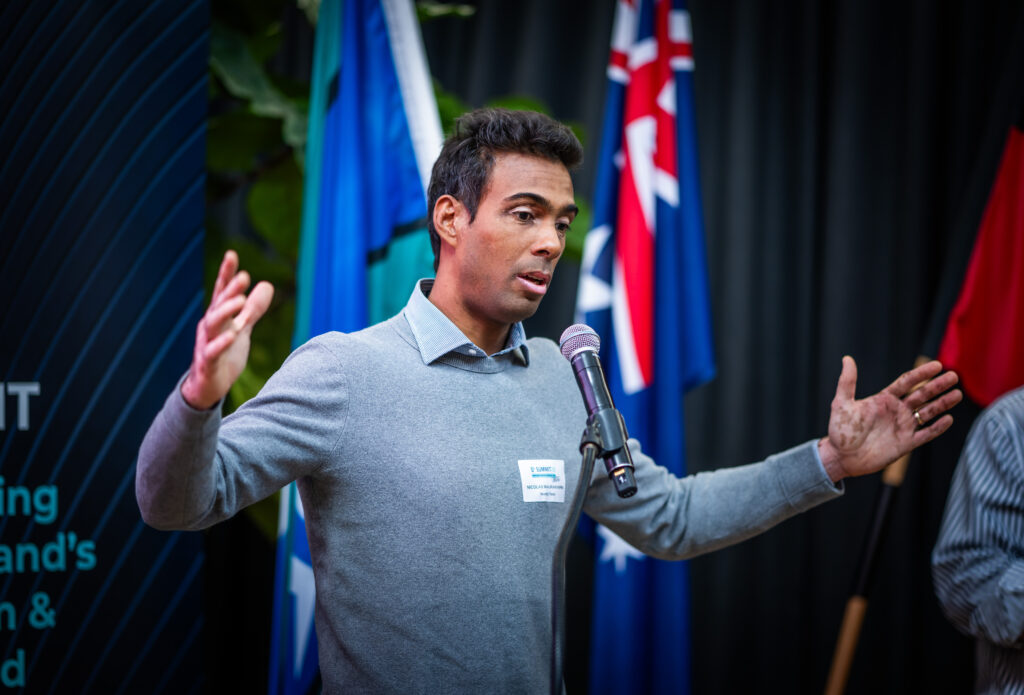
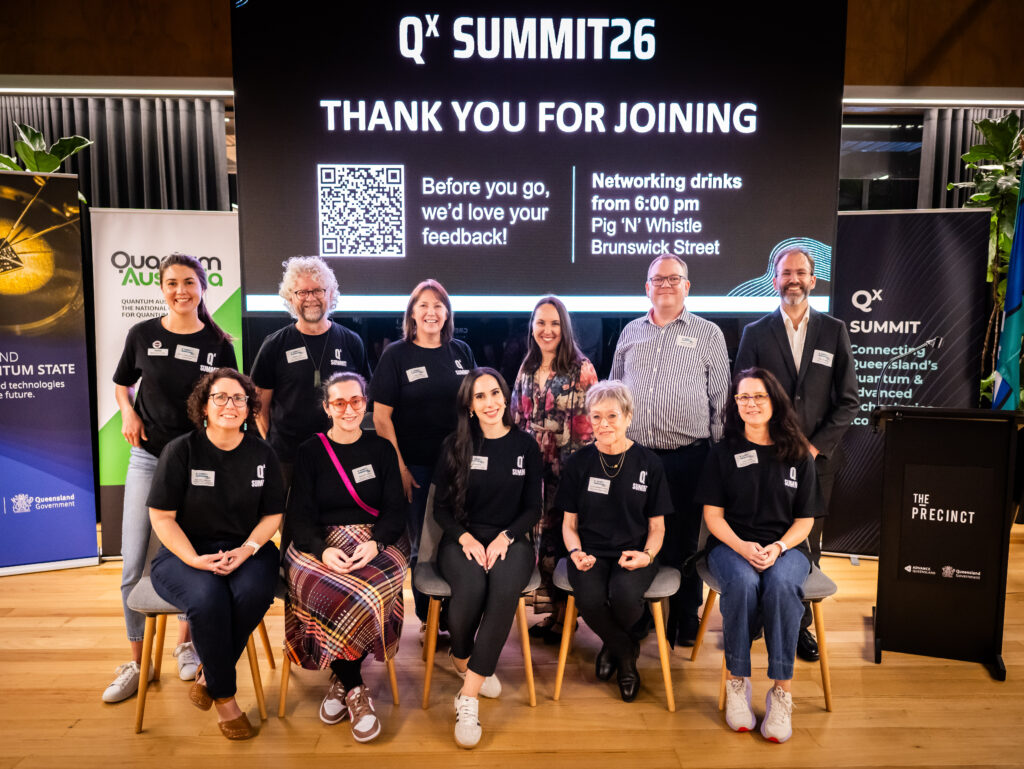
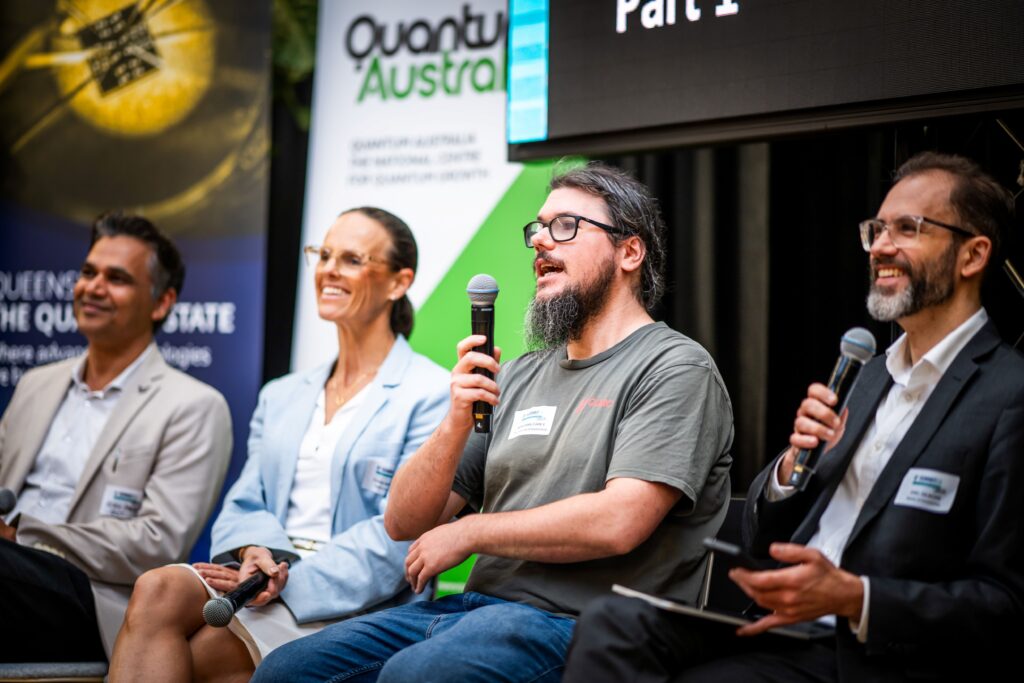
In Brisbane, we hosted the Qx Summit: Make it in Queensland, delivered in partnership with Quantum Australia, the Department of Environment, Tourism, Science and Innovation (DETSI) and Silicon Catalyst. Now in its third year, the event brought together more than 200 representatives from academia, government, industry and start-ups to discuss the future of Australia’s quantum ecosystem, including opportunities connected to the Brisbane 2032 Olympic and Paralympic Games and lessons from successful Queensland technology ventures.

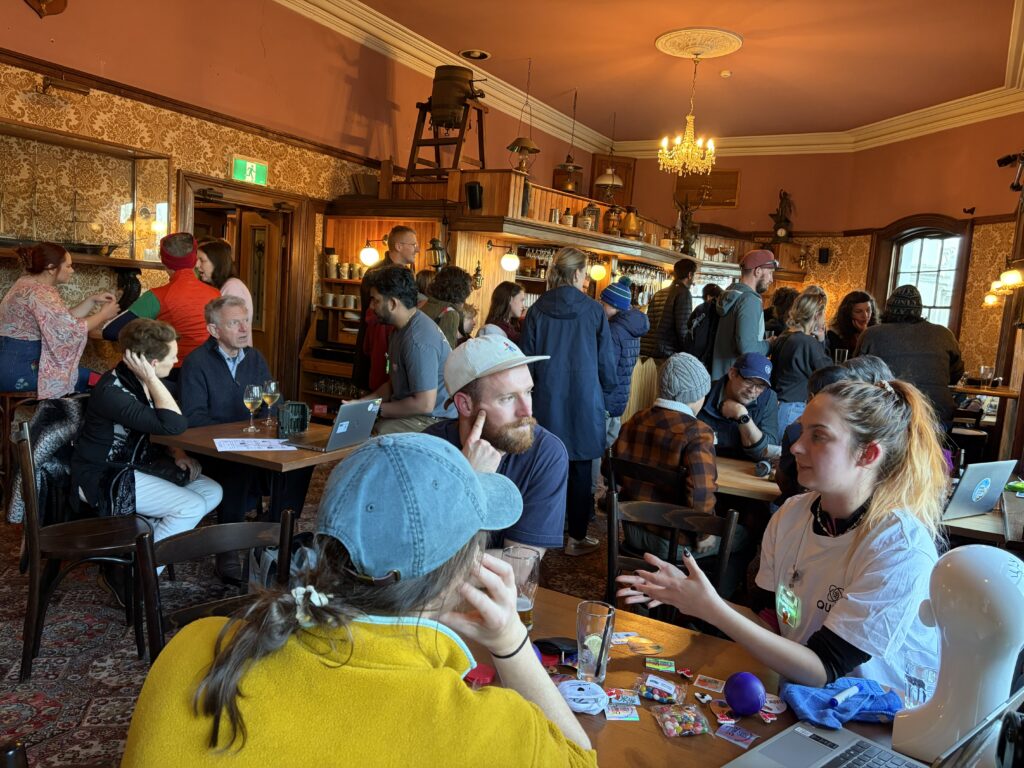
The week also provided an opportunity for QUBIC researchers to come together through the Brain Theme Workshop to explore how emerging quantum technologies can be used to observe, manipulate and better understand neural systems across scales. Conversations around quantum technologies and neuroscience sparked new ideas and collaborations.

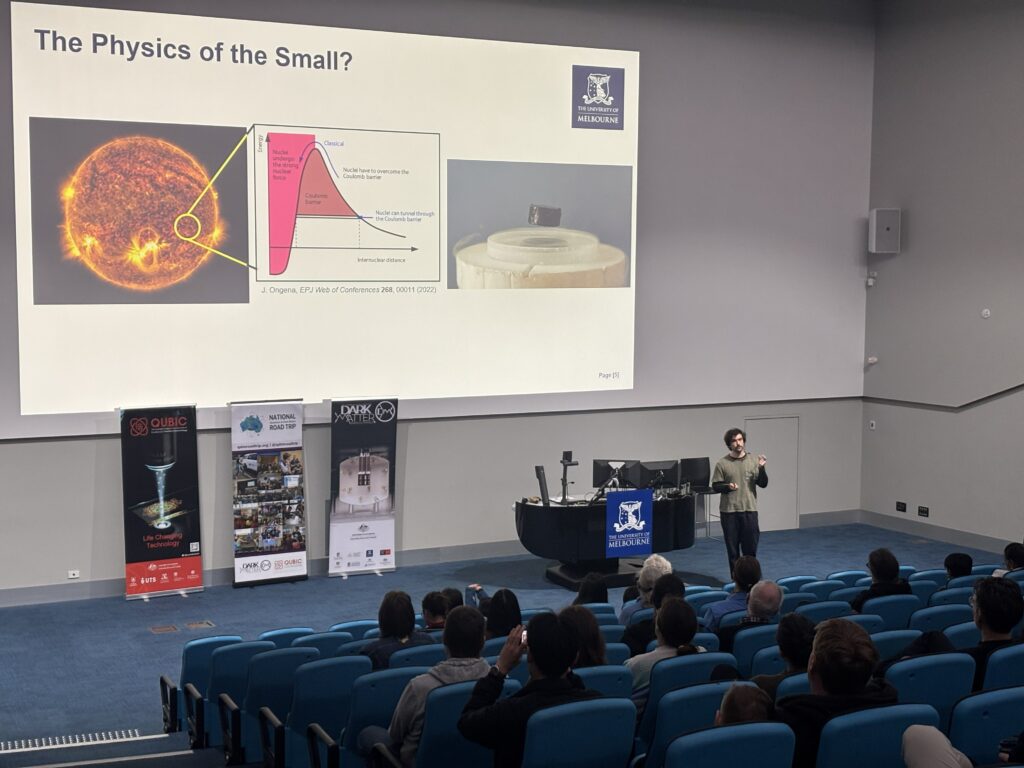
Our researchers also participated in a range of public engagement activities, including science pub quizzes in Brisbane, Melbourne and Tasmania, as well as public lectures exploring topics from quantum technologies to the mysteries of dark matter.

In Melbourne, Dr Dan McCloskey shared his expertise in diamond quantum sensing at the Melbourne Quantum & Dark Matter Experience, helping audiences explore the fascinating world of quantum science through interactive discussions and activities.

Science meets storytelling

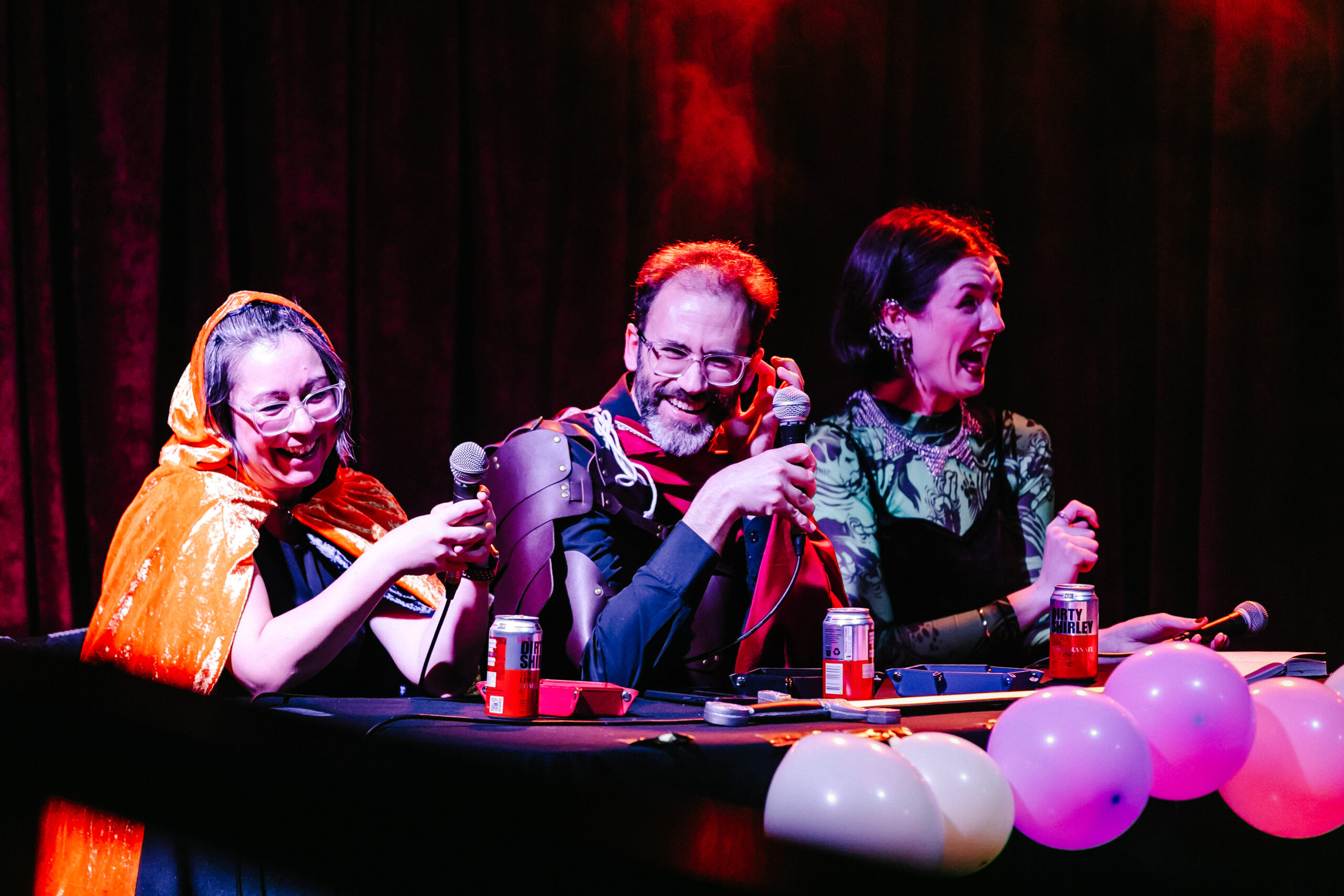
One of the week’s most memorable events was Monsters & Molecules: Journey to the Centre of the Brain, a live, Dungeons & Dragons-inspired science improv show held in Brisbane (image above).

Featuring QUBIC Deputy Director Professor Lezanne Ooi alongside educator Joel Gilmore, comedian Jaimeson Gilders, science communicator Shu Ezackial and bard Sean Sully, the event combined science, storytelling and improvisation to take audiences on a unique journey through the human brain, demonstrating how creative approaches to communication can make complex scientific concepts accessible, engaging and entertaining.

Sharing science beyond the laboratory

Throughout National Science Week, researchers embraced opportunities to connect with audiences through radio interviews, school presentations and community events.

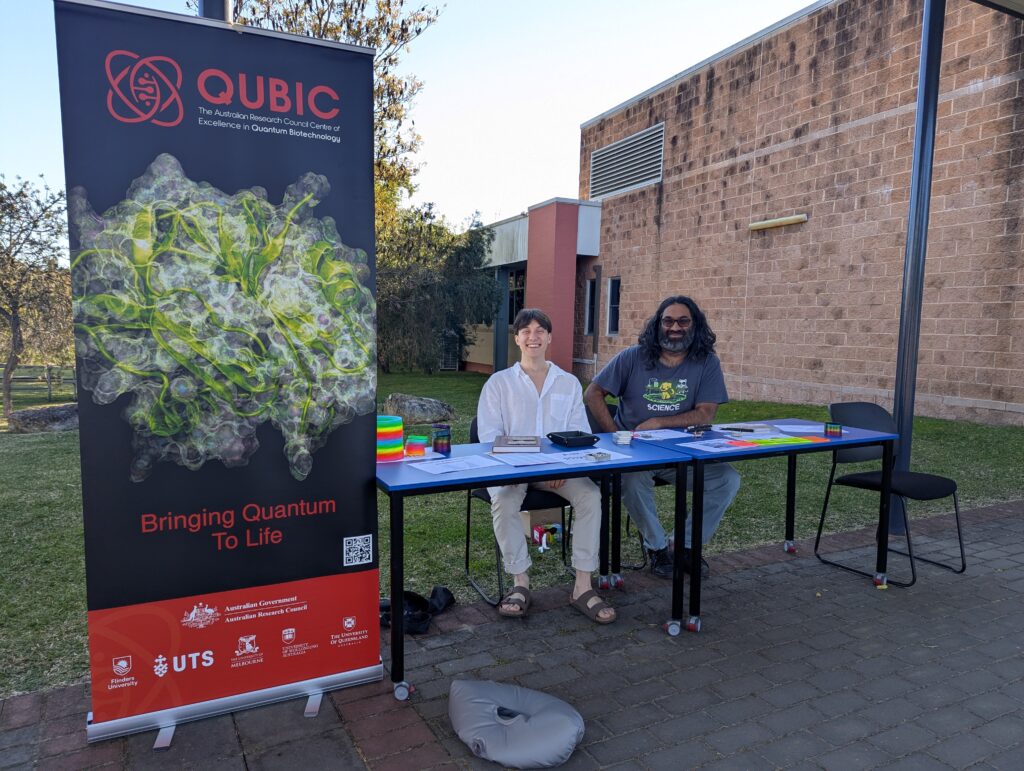
In Wollongong, Dr Anjay Manian appeared on ABC Illawarra Drive to discuss how migratory birds may sense Earth’s magnetic field and what this remarkable phenomenon can teach us about the quantum world (listen here). He also joined Holden Paz at the UOW Nowra Open Day, where they spent the day engaging visitors of all ages in conversations about science, university pathways and quantum biotechnology.

Meanwhile, Charlie Gray visited Craigslea State High School in Brisbane to speak with students about careers in science and his journey into research.

These events highlighted the importance of creating opportunities for researchers to share their work directly with the broader community, building understanding of both the scientific process and the real-world impact of research.

A week of curiosity, connection and discovery

Across Australia, we connected with thousands of people through school visits, public talks, workshops, festivals, media appearances and industry events, shaping the future of quantum biotechnology by inspiring future scientists, innovators and problem solvers.

While the week may be over, our mission continues. Every day, QUBIC researchers are working to harness quantum technologies for applications across health, agriculture and energy, creating new knowledge and translating discoveries into real-world impact.

A heartfelt thank you to everyone who attended an event, hosted a session, collaborated with us, asked questions and shared in the excitement of discovery. Most importantly, thank you to our incredible researchers who generously gave their time, energy and expertise to make National Science Week 2026 such a success.

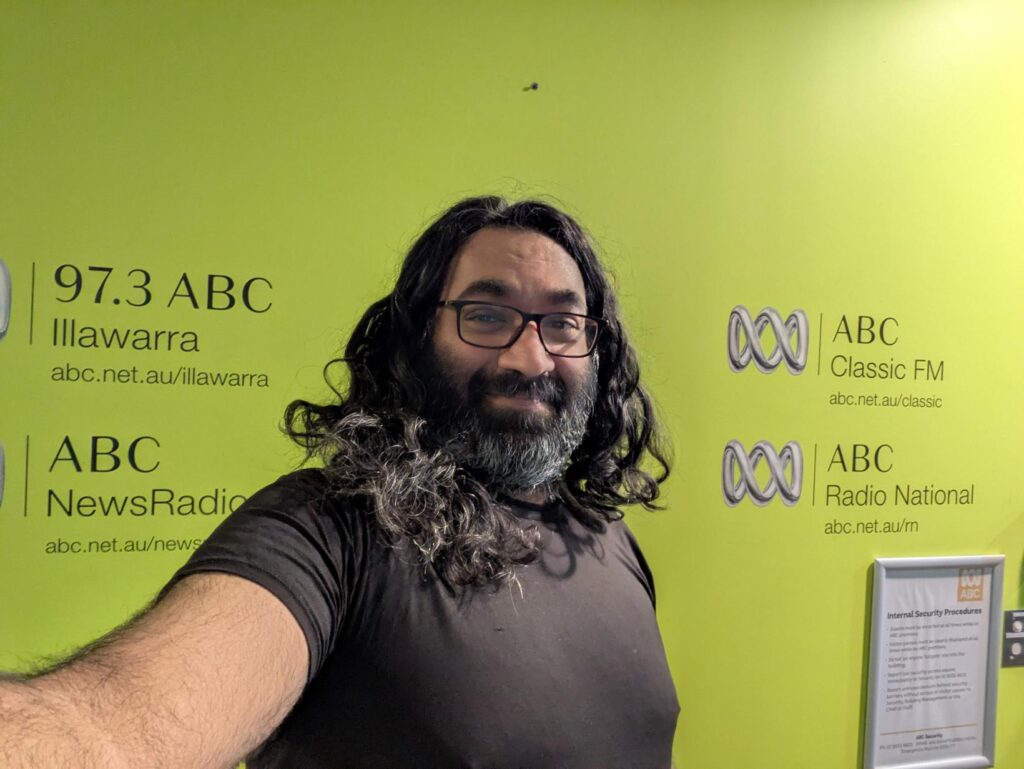
Monsters & Molecules live on stage in BrisbaneAnjay at the ABC studios Illawarra Holden and Anjay at UOW Nowra Open Day    Dr Nico Maranyapin at Qx

Qx organisers Road Trippers in Tassie Demos at schools in Tasmania


Dr Ben Carey at Qx

Philanthropic donation accelerates cutting-edge Parkinson’s disease research at the University of Wollongong

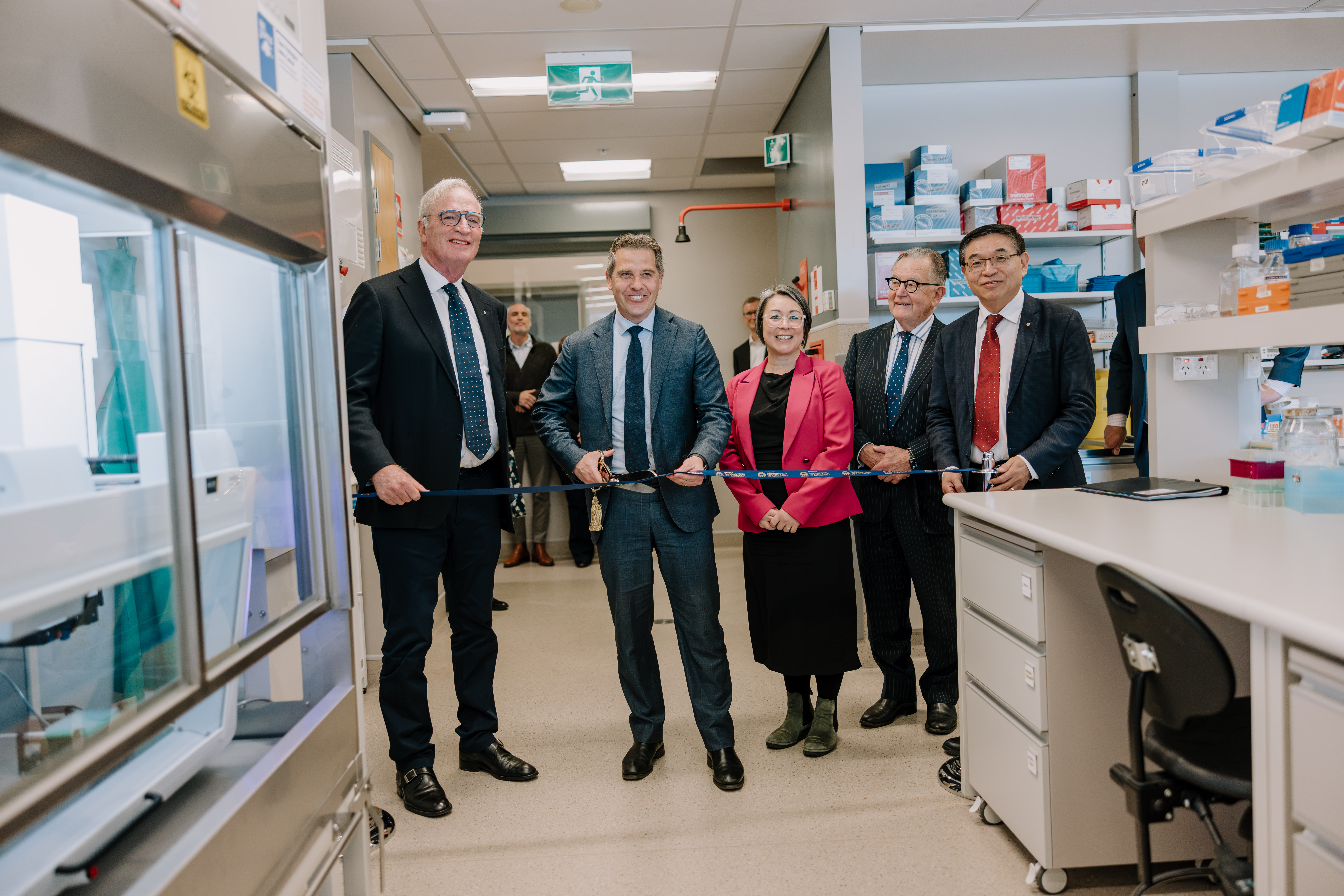
A huge congratulations to QUBIC Deputy Director Professor Lezanne Ooi and the team at Molecular Horizons, University of Wollongong, on securing a major investment that will accelerate Parkinson’s disease research.

Made possible through a $1.5 million philanthropic donation from the Parkinson’s Research Foundation, the new imaging capability represents far more than a piece of equipment. It is a significant vote of confidence in the research being led by Professor Ooi, one of Australia’s leading Parkinson’s disease researchers, and in its potential to improve our understanding of one of the world’s fastest-growing neurological conditions.

Parkinson’s disease affects more than 200,000 Australians and around 10 million people worldwide and is Australia’s second most common neurodegenerative disease after dementia. Despite significant advances in research, many questions remain about how the disease develops and progresses, and how it can be detected and treated earlier and more effectively.

The new imaging platform will allow Professor Ooi and her team to analyse biological samples at a scale and speed that was previously difficult to achieve, helping researchers uncover the cellular and molecular processes that drive the disease.

“The Opera Phenix enables rapid analysis of large volumes of cell samples, allowing us to interrogate genetic, environmental and cellular pathways with far greater efficiency. This will directly accelerate our work towards improved diagnostics and therapies,” Professor Ooi said.

By enabling larger, faster and more sophisticated studies, the platform will help accelerate efforts to identify new therapeutic targets, improve diagnostics and bring promising discoveries closer to people living with Parkinson’s disease.

The announcement highlights the importance of investing in both people and technology. Breakthrough discoveries happen when talented researchers have access to the tools needed to pursue ambitious ideas and translate them into real-world impact.

Congratulations again to Lezanne and the Molecular Horizons team on this outstanding achievement.

Read the full UOW announcement here.

Image above L-R: Mr Michael Katz, Parkinson’s Research Foundation; The Hon. Ryan Park MP, New South Wales Minister for Health and Member for Keira; Professor Lezanne Ooi, University of Wollongong; Mr Bryan Belling, Parkinson’s Research Foundation; Professor Max Lu AO, UOW Vice-Chancellor.

Brainwave Seed Funding

Brainwave Seed Fund

Sparking collaborations that change how we understand the brain.

Purpose:
To catalyse innovative research and foster new collaborations, we are establishing a competitive Seed Grant Scheme comprising four grants of $5,000 each. These small, targeted grants will provide investigators with the resources needed to generate preliminary data, explore novel research directions, establish interdisciplinary partnerships, and develop proof-of-concept studies that position researchers to establish a more developed high impact research program in the Centre. The scheme will particularly encourage early- and mid-career researchers and facilitate collaborations across disciplines and nodes. By investing in high-potential pilot projects, the Brainwave Seed Fund will strengthen the Centre’s research pipeline and build capacity within our research community.

The 2026 Centre workshop is designed to foster new collaborations and identify innovative research directions across the Centre.

How it will work:
The Quantum Brain Toolbox Workshop
The workshop is about taking the next step in how we work together – moving beyond describing what we can do and starting to demonstrate it.
In the morning we will have lab demos from Itia, Warwick and Halina’s groups; in the afternoon we will have talks from my, Jiajia and David’s groups. Finally, we will finish with a collaboration session where participants start the discussions on their collaborative grant applications. We’ll be working together to develop collaborative project pitches for the Brainwave Seed Fund scheme. These aren’t expected to be fully formed grant applications by the end of the day. Instead, they’re an opportunity to identify exciting ideas, build new teams, and begin collaborations. The grants will be due the following week and are very short forms that should be a minimal burden for researchers.

For those that are providing lab demos – please tell us about what your technology can and can’t do, so that participants can start to think about how it could be applied to a biological question or how it could be further advanced.

For afternoon presenters – please provide some background on your research questions and findings but let us know what you would love to measure but don’t yet know how to. Hopefully, this will help us to find new ways to work together to answer bigger questions.

Overall, be curious, ask questions, introduce yourself to someone you haven’t met before, and think broadly about how your expertise could complement someone else’s.

For more information:
Please see 2026 Brainwave Seed Fund Application Form and Brainwave Seed Fund Assessment Rubric.

The Brainwave Seed Fund grants will be launched at the workshop on Wednesday 19th August and will be due by 5pm on Friday 28th August by email to: lezanne@uow.edu.au

If you have any questions, please reach out to Lezanne.

Expected completion within 12 months.