
Dr Jorge Campos joins QUBIC, bringing expertise in quantum chemistry, molecular science & quantum computing

QUBIC is pleased to welcome Dr Jorge Campos as a Chief Investigator.

Based at The University of Queensland, Jorge holds a joint appointment in Quantum Science across the Schools of Mathematics & Physics and Chemistry & Molecular Biosciences. His research sits at the intersection of quantum chemistry, molecular science and quantum computing, developing theoretical and computational frameworks that help researchers understand and engineer complex quantum systems.

Jorge’s interdisciplinary expertise is expected to strengthen QUBIC’s capacity to connect fundamental quantum science with real-world challenges in biotechnology, health and sustainability, helping bridge the gap between discovery and application. His work develops predictive models of molecular systems, explores how light interacts with matter at the quantum level, and advances quantum algorithms that could enable future quantum computers to address complex scientific problems.

Jorge joins an expert team of researchers using quantum techniques to redefine how we model molecules and their interactions. His expertise in quantum simulation and molecular modelling is expected to support the development of catalysts and energy-capture and storage materials for clean-energy and resource-sector applications, as well as next-generation sensors for medical diagnostics and biotechnology. By combining insights from physics, chemistry and computation, Jorge’s research aims to build the molecular understanding and computational foundations needed to translate quantum technologies into practical tools across these fields.

“Quantum effects in living systems are delicate yet consequential.” said Jorge.

“At QUBIC, I have the opportunity to bring my experience in theoretical and computational chemistry to understanding how nature puts these effects to work, and how we might do the same. I’m excited to work alongside talented colleagues to turn what we learn from living systems into technologies that address some of society’s most pressing challenges.”

 In addition to his role within QUBIC, Jorge is a researcher with the Queensland Quantum Decarbonisation Alliance (QDA), where his research supports the development of physical models needed to simulate and engineer molecular systems for clean energy and quantum technology applications.

 “One of QUBIC’s greatest strengths is bringing together expertise from across disciplines to tackle challenges that no single field can solve alone,” said Professor Warwick Bowen, QUBIC Director.

“Jorge’s research sits at the intersection of quantum chemistry, molecular science and quantum computing, adding an important new capability to both QUBIC and the Queensland Quantum Decarbonisation Alliance. His expertise will help us better understand how molecules work, which is one of the key opportunities enabled by quantum technologies, promising to transform how we develop drugs, understand disease, and develop clean-energy technologies.”

Jorge completed his PhD in Chemistry at the University of California San Diego and was subsequently a Postdoctoral Fellow in the Matter Lab at the University of Toronto, where he worked on quantum chemistry, molecular photonics and emerging quantum technologies.

Jorge’s appointment further strengthens QUBIC’s capacity to bring together quantum science, molecular systems and emerging quantum technologies, accelerating the Centre’s mission to translate quantum discoveries into practical outcomes.

We are delighted to welcome Jorge to QUBIC and look forward to the new opportunities his expertise will create across the Centre’s research portfolio.
Beyond outreach: helping more young women see a future in STEM 

Australia’s future scientific breakthroughs depend on attracting talented people into STEM from every community. That means ensuring a young person’s opportunity to explore STEM is not determined by where they live, but by their curiosity, ambition and potential.

Yet for many young women in regional and rural communities, opportunities to engage directly with researchers and experience science firsthand can be harder to access.

The Rural Women in STEM Mentoring Program is one example of how schools, universities and research organisations are working together to address that challenge.

Developed by Dr Louise Puslednik, Science Education Researcher at the University of Southern Queensland, the program connects regional secondary school women with researchers over an extended period, giving them the opportunity to explore scientific questions, work with real data and experience the research process firsthand.

The impact of this approach is already becoming clear. In just two years, the program has engaged 50 young women, with 94% reporting growth in scientific inquiry skills and more than 80% expressing interest in pursuing STEM careers.

For QUBIC, whose research sits at the intersection of quantum science, biology and engineering, supporting the next generation of STEM talent is about ensuring that talented young women can see a place for themselves in science.

The young women participating in this program may one day become the researchers, innovators and problem-solvers tackling some of Australia’s biggest challenges. That’s why, for the second year running, QUBIC has been proud to mentor students and connect them with researchers from across the broader research community, helping them discover where their curiosity and talents could take them.

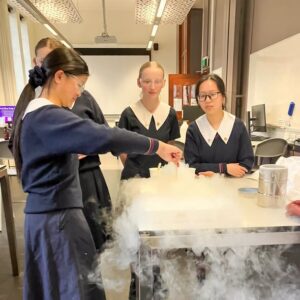
4 Year 10 students from The Glennie School making liquid nitrogen icecream
Making icecream with liquid nitrogen was one of the highlights of the day for the students.

From learning about science to doing science 

Six months ago, Year 10 students from The Glennie School met with researchers from QUBIC, the ARC Centre of Excellence for Plant Success in Nature and Agriculture and the ARC Research Hub for Advanced Manufacture of Targeted Radiopharmaceuticals (AMTAR) to discuss what life in science really looks like, from the excitement and challenges of research to the many different paths into a STEM career.

Over the months that followed, those conversations evolved into active participation.

Working alongside researchers, students developed research questions, analysed data and prepared presentations on topics spanning ecology, genetics, medical imaging, mental health and mass photometry.

Rather than simply hearing about scientific discoveries, students had the opportunity to explore research projects in depth, dig deeper into the data and actively participate in how the science is done.

That shift is what makes Rural Women in STEM such a valuable program.

A single interaction can spark curiosity, but sustained participation builds confidence, develops skills and provides a deeper understanding of what science involves and where it can lead.

It also demonstrates an important reality: there is no single pathway into science. STEM is a broad and diverse field, shaped by people with different interests, skills and experiences working across a wide range of disciplines.

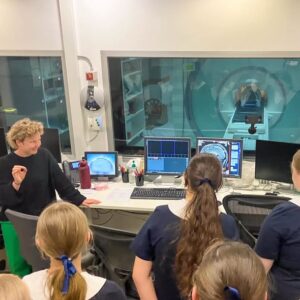
Group Year 10 students visiting the UQ Centre for Advanced Imaging's 7T MRI Machine
Students visit the 7T MRI at UQ’s Centre for Advanced Imaging as part of a tour with the ARC Research Hub for Advanced Manufacture of Targeted Radiopharmaceuticals (AMTAR), where they spoke with a research radiographer about Magnetic Resonance Imaging (MRI).

Taking ownership of their research 

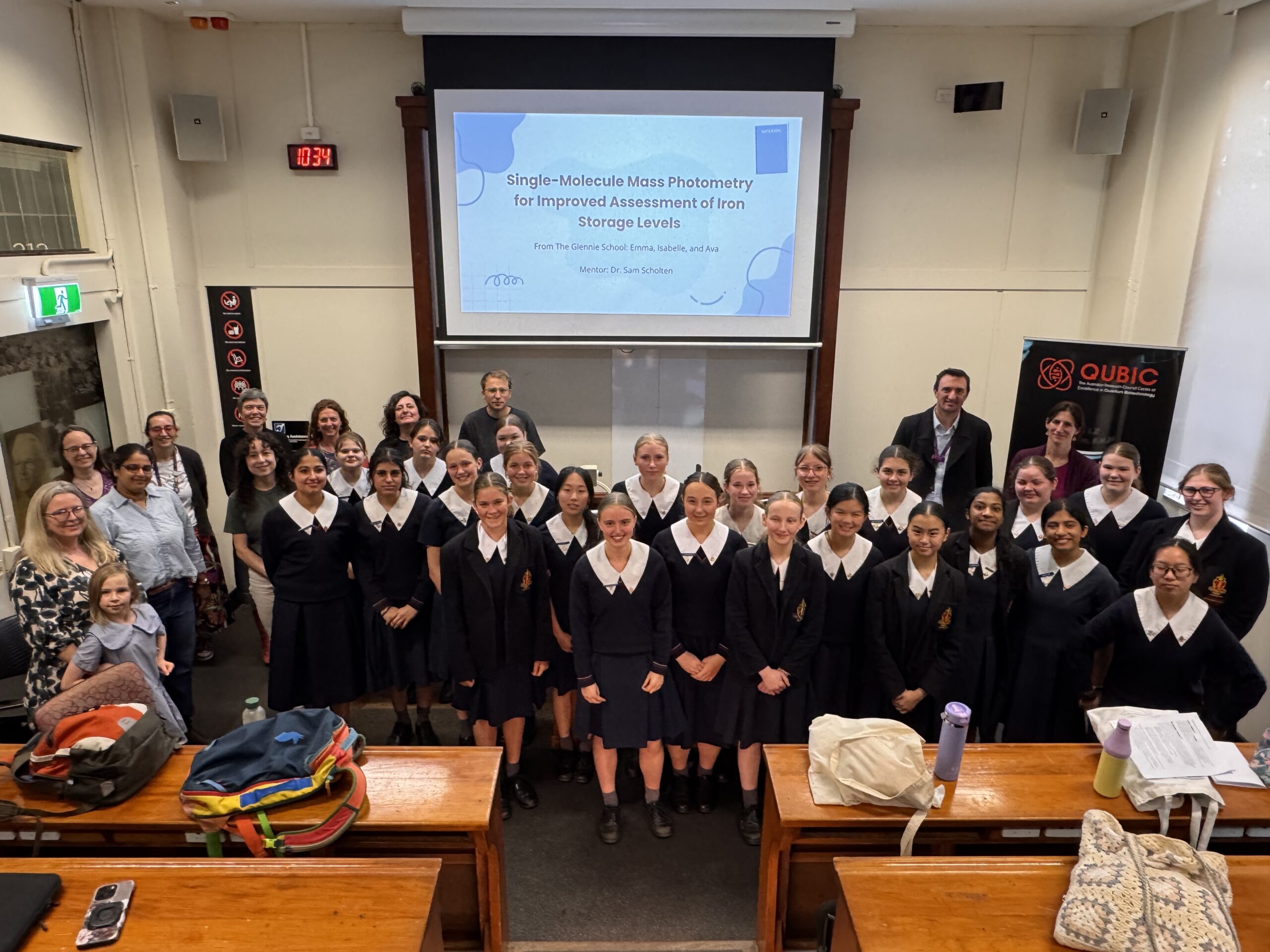
On 16 October, the students travelled to The University of Queensland to present their findings to mentors, university academics and researchers, before spending the day taking part in hands-on science and research activities across campus.

Their projects explored questions ranging from the recovery of the Lord Howe Island woodhen population and biological markers associated with depression, to gene expression and the use of mass photometry to study individual molecules.

The presentations highlighted not only the breadth of the students’ research topics, but the depth of their engagement with them.

Each team tackled a challenging scientific question, worked with real research data and communicated their findings with confidence and clarity. Students demonstrated a strong understanding of their data, thoughtfully discussed the limitations of their analyses and responded confidently to questions from the audience.

Six months earlier, the students were meeting researchers for the first time. In October, they stood in front of university academics and presented research of their own.

This represented the culmination of six months of hard work, reflecting both the students’ growing understanding of these complex scientific topics and the confidence they had developed to discuss and communicate what they had learned.

Ongoing impact

The program’s impact has also been recognised beyond the classroom. In September, Dr Louise Puslednik was highly commended in the Raising the Regions category at the 2026 Women in Technology Awards for the Rural Women in STEM Mentoring Program.

QUBIC is proud to support the program and grateful to Louise for creating opportunities that connect young women with researchers and real-world scientific challenges.

The Rural Women in STEM Mentoring Program is helping build the next generation of STEM talent, ensuring more young women can see a place for themselves in science and research.

For QUBIC, that’s an investment in the future of Australian science.

QUBIC strengthens quantum diamond ecosystem through new Melbourne hub

QUBIC is part of a new ecosystem bringing together the capabilities needed to move quantum diamond technologies towards practical applications.

The Melbourne Quantum Diamond Hub (MQDH) brings together 14 organisations from across research, commercial industry and advanced manufacturing, showcasing the depth of quantum diamond capability in Melbourne and greater Victoria and strengthening connections across research and industrial value chains.

Built on more than 30 years of quantum diamond research and development in the region, the Hub aims to promote the ecosystem’s expertise and future ambitions to Australian and global stakeholders, while creating stronger connections between the organisations working across it.

For QUBIC, participation in the Hub positions the Centre’s quantum biotechnology expertise within a wider value chain spanning research and discovery through to application, testing and production.

Bringing biotechnology capability to the ecosystem

QUBIC brings a distinctive biological and health focus to this emerging ecosystem.

Across QUBIC, researchers are developing technologies to observe, understand and ultimately manipulate biological processes at extremely small scales, including the structure and dynamics of individual molecules.

One area of this work uses quantum defects in nanodiamonds to detect magnetic field-dependent signals from single molecules. Combined with technologies such as upconversion nanoemitters and far-sub-wavelength optical cavities, QUBIC is working towards new ways to probe the structure and dynamics of biological systems with high sensitivity and speed.

Potential applications include quantum-enabled neural imaging and advanced quantum imaging and sensing technologies to investigate the multi-scale dynamics driving cellular behaviour.

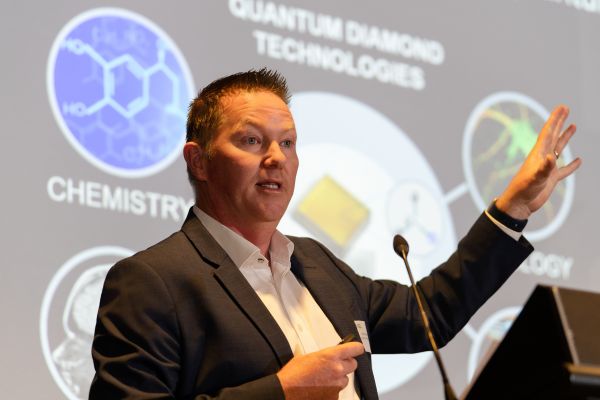
QUBIC Chief Investigator Associate Professor David Simpson at the University of Melbourne is a key contributor to the Centre’s quantum diamond capability and delivered the keynote address at the Hub’s launch.

QUBIC is represented within the Hub alongside affiliated companies FeBI Technologies and Chromos Labs, further connecting the Centre’s research expertise with companies working towards translation and application.

Building pathways from discovery to application

The significance of the Hub lies in bringing these different parts of the quantum diamond ecosystem together.

Research institutions provide underpinning science and technology development, while spinouts and start-ups are working to commercialise innovations and bring them to market. Together with advanced manufacturing and other specialist capabilities, this is creating a connected local value chain spanning discovery, application, testing and production.

For QUBIC, this creates opportunities to build new collaborations, make its quantum diamond and biotechnology capabilities more visible, and connect researchers with complementary expertise across the value chain.

It also provides another pathway towards one of QUBIC’s broader ambitions: translating advances in quantum science into technologies that can address real challenges in biology and health.

The Melbourne Quantum Diamond Hub Capability Statement showcases the organisations and expertise represented across the ecosystem, with potential impact spanning biotechnology and healthcare, defence and space, mining and resource exploration, advanced manufacturing and other sectors.