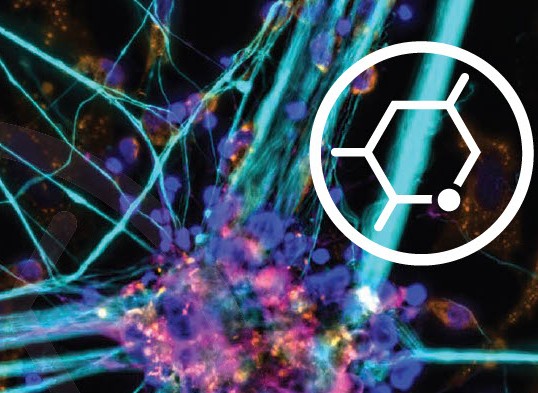
Seeing and Controlling the Molecular Engines of Life

Imagine a future where medical treatments are more responsive, biological systems are easier to control, and disease can be detected earlier and more precisely. Reaching this future depends on understanding how life organises itself at the most fundamental, molecular level and how those processes might be guided or redesigned.

Many of the processes that sustain life occur at time and length scales far beyond what we can see. At the molecular scale, living systems organise themselves dynamically, forming temporary structures that control how cells function, adapt and respond to their environment. Understanding this hidden layer of organisation is essential for developing more effective therapies, diagnostics and biotechnologies.

Biomolecular condensates are emerging as a unifying framework for understanding and eventually shaping this molecular organisation.

Biomolecular condensates are dynamic, membrane‑less compartments that form when proteins and nucleic acids self‑assemble inside cells. Rather than being enclosed by physical boundaries, these structures arise through collective molecular interactions, allowing cells to concentrate and regulate biological activity with
remarkable flexibility.

Biomolecular condensates play a central role in organising life at the molecular level. They help regulate gene expression, coordinate biochemical reactions and
enable cells to respond rapidly to change. The same properties that make biomolecular condensates powerful biological tools also place them beyond the reach of many existing techniques.

Condensates are small, highly dynamic and governed by subtle molecular forces. Small changes in their composition or environment can significantly alter
their behaviour. In healthy systems, this adaptability is essential. In disease, however, condensates can become disrupted, contributing to conditions such as
neurodegeneration and cancer.

Understanding how condensates form and function, and how they might be controlled, requires new ways to measure molecular interactions with exceptional sensitivity.

Where quantum biotechnology enters the picture

Many of the key processes within biomolecular condensates occur at the nanoscale, where classical measurement tools struggle to capture weak and transient interactions. This is precisely the regime where quantum technologies offer new opportunities.

Ultra‑sensitive quantum sensors, advanced spectroscopic techniques and quantum‑informed simulations provide new ways to probe molecular organisation and dynamics. When combined with experimental platforms in molecular and cellular biology, these tools are allowing QUBIC researchers to characterise condensates with unprecedented precision.

QUBIC provides the environment where these capabilities come together, linking quantum science with biological experimentation and theory.

From insight to application

By learning how to control the formation and properties of biomolecular condensates, researchers could design programmable biomaterials with applications across
health and biotechnology, including:

  • Smarter drug delivery systems that respond dynamically to their environment
  • Synthetic bioreactors that organise complex reactions without rigid boundaries
  • New diagnostic platforms that exploit condensate sensitivity to molecular change

These possibilities show how quantum biotechnology extends beyond measurement, opening pathways to designing and engineering living matter itself.

A unique capability at the molecular frontier

Biomolecular condensates sit squarely within QUBIC’s mission to apply quantum technologies where biological complexity is greatest and new tools are most needed. By uniting researchers across institutions and research themes, the centre connects fundamental molecular insight directly to biological relevance.

This work positions QUBIC to drive future advances in healthcare, diagnostics and biotechnology by revealing how life organises itself at the molecular scale and turning that understanding into capability.

A centre‑wide effort across themes

In 2025, researchers from three QUBIC nodes (University of Wollongong, The University of Queensland, and University of Technology Sydney) published a major review in Advanced Materials: Biomolecular Condensates as Emerging Biomaterials: Functional Mechanisms and Advances in Computational and Experimental Approaches. Spanning the Molecules, Cells and Brain themes, the review integrates expertise in molecular physics, chemistry, biology and computation to examine biomolecular condensates from multiple perspectives. It brings together advances in experimental techniques and computational modelling to reveal the physical principles that govern condensate behaviour, and to explore how these systems could be developed as a new class of functional biomaterials.

This is precisely the kind of problem QUBIC exists to solve, because progress depends on integrating physics, chemistry, biology and computation in ways
that individual disciplines, projects or institutions cannot achieve alone.

Read more about QUBIC’s Molecules theme

An extract from the 2025 QUBIC Annual Report. Read the full report here.
QUBIC director brings the future to 300 Brisbane students

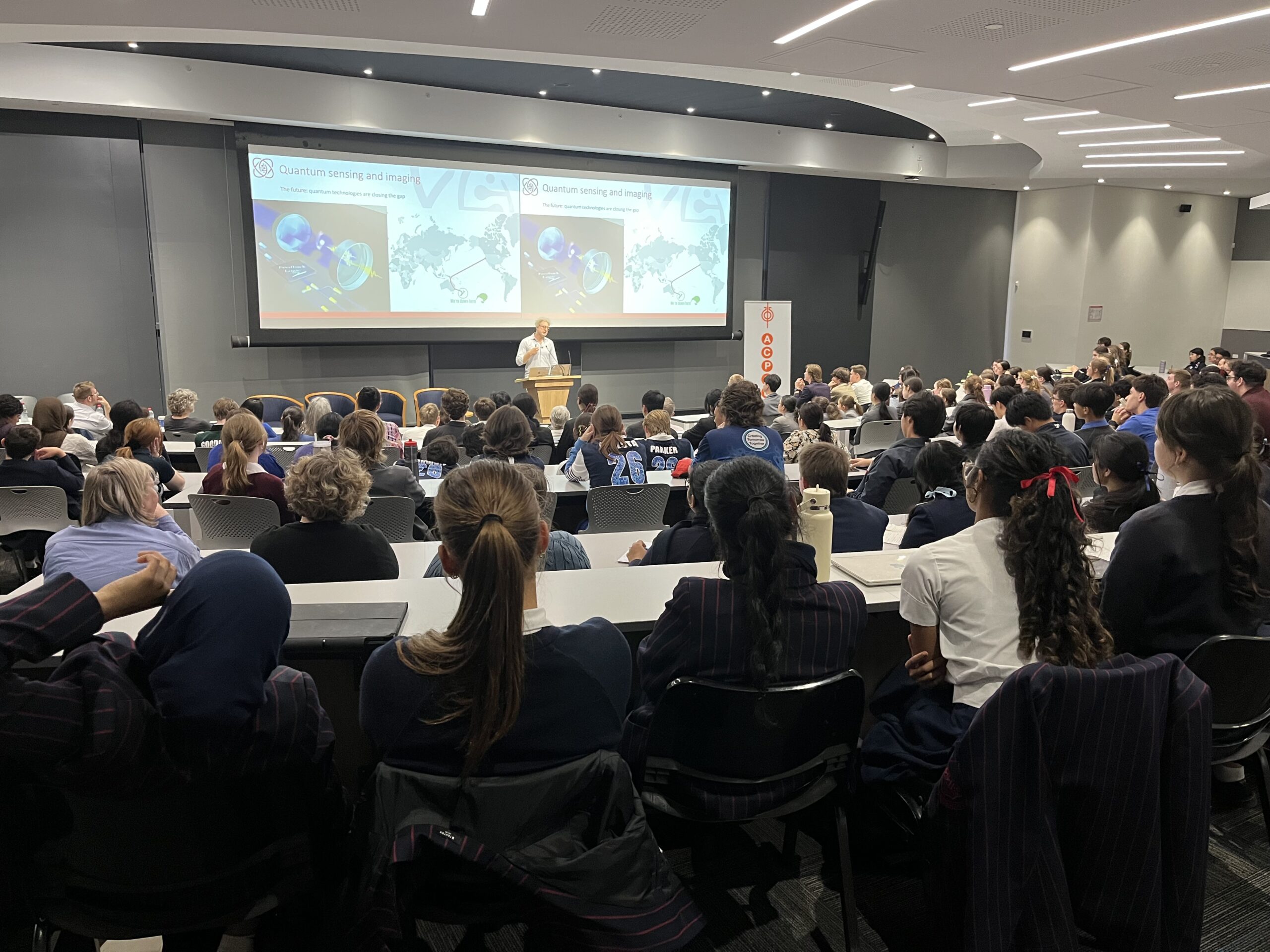
Centre Director Professor Warwick Bowen took to the stage at the annual Churchie Physics Lecture to explore how quantum technologies are poised to transform medicine — and why that future is closer than most people think.

On 12 May, around 300 high school students from across Brisbane gathered at Anglican Church Grammar School (Churchie) for the school’s annual Physics Lecture. This year’s keynote was delivered by QUBIC’s Director, Professor Warwick Bowen, whose talk — How quantum is set to change medicine — traced the journey from the fundamental strangeness of quantum mechanics to its growing role in medical imaging, drug discovery, and brain science.

Warwick opened by grounding students in Quantum 1.0: the first revolution in quantum understanding that already underpins technologies many take for granted — from MRI and PET scans to magnetoencephalography. He then turned to Quantum 2.0, the era we’re now entering, in which scientists are actively engineering quantum phenomena to do things classical technology simply cannot.

“These students are going to inherit a world shaped by quantum technology — and most of them don’t know it yet. If even a few of them walk away wanting to understand the physics behind an MRI machine, or curious about what a quantum computer could mean for drug development, then the evening did exactly what it should.”

— Professor Warwick Bowen, Director, QUBIC

The lecture drew on QUBIC’s three grand challenges: imaging and modelling individual protein molecules in real time, understanding how cell-scale behaviour emerges from molecular interactions, and achieving whole-brain electromagnetic imaging at single-neuron resolution. Warwick illustrated each with concrete examples — from the exponential complexity that makes molecules so hard to simulate, to quantum diamond microscopes and the prospect of next-generation brain scanners affordable enough to reach regional hospitals.

The evening was a strong success. Warwick noted enthusiastic engagement throughout, with students asking questions that reflected genuine curiosity about both the science and its real-world stakes. Elizabeth Jenkins, Head of Physics at Churchie, echoed that sentiment in a note to the Centre afterwards, describing the evening as something students “value enormously” and extending an open invitation for QUBIC to return.

Outreach events like this one are central to QUBIC’s mission — bringing the science of quantum biotechnology out of the lab and into the broader community, and helping the next generation of students see themselves as part of that story.

Photonic molecular fingerprinting for fairer sports

Quantum assays for anti-doping control

The challenge

Erythropoietin (EPO) is a natural hormone that stimulates red-blood-cell production. Synthetic EPO closely mimics the natural form, making it hard to detect quickly and at low concentrations when misused for illegal doping. Current, lab-bound methods are slow and complex, creating a need for faster, more sensitive, field-ready tests.

The solution

A quantum photonic lab-on-a-chip that traps and analyses single EPO molecules, measuring mass, electrical charge and a vibrational fingerprint to tell natural from synthetic EPO. Combining these readouts aims to improve speed and sensitivity, potentially suitable for real-world, trackside testing.

The research

A QUBIC research team at the University of Queensland is developing and validating an integrated chip that optically traps proteins to provide label-free molecular fingerprinting of EPO at very low concentrations. “We start with known samples, set calibration, confirm specificity and detection limits, build and trial a prototype chip for anti-doping workflows,” says researcher Dr Igor Marinkovic.

Impact

“Direct molecular fingerprinting could redefine how EPO doping is detected,” says Dr Pavlina Naydenova. “Quantum photonic chips promise faster, more sensitive and selective testing, giving sporting bodies and clinicians a powerful new tool to safeguard athlete health and ensure competition integrity.”

Research team
  • Dr Igor Marinkovic
  • Dr Pavlina Naydenova
  • Dr Nicolas Mauranyapin
  • Prof Warwick Bowen
  • Kyle Clunies-Ross

Funded by the Queensland Government’s Quantum 2032 Challenge

Queensland’s Quantum Decarbonisation Alliance appoints its leadership team 

Meeting net-zero commitments will require faster, deeper innovation across energy, materials and industrial systems — and many of the hardest decarbonisation problems now sit beyond the limits of today’s tools. The Queensland Quantum Decarbonisation Alliance was established to change that, bringing quantum capability to the places where conventional approaches fall short. 

As the Alliance accelerates from establishment to delivery, the $30 million initiative has appointed its inaugural leadership team. 

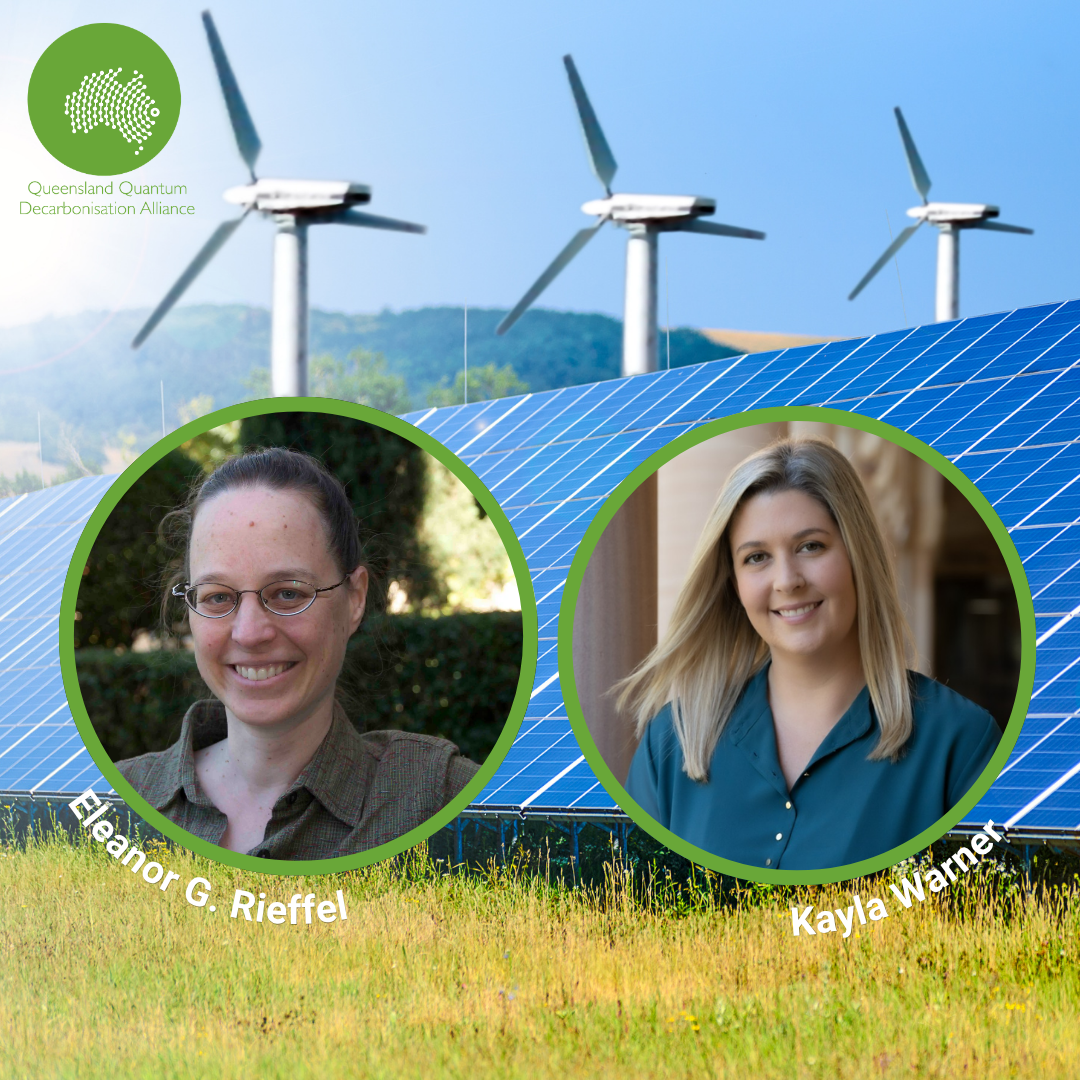
Prof. Eleanor G. Rieffel joins as Director, and Kayla Warner as Manager — formalising the leadership of a 27-partner consortium built to apply quantum technologies to one of the defining challenges of our time. 

Handing over the keys 

The QDA was established through QUBIC, alongside core partners the University of Queensland, Griffith University, PsiQuantum, and CSIRO — part of a broader 27-partner consortium. The partners span quantum science, decarbonisation research and carbonintensive industry including Siemens, Aurizon and Energy Queensland, creating a structure that connects frontier capability with realworld need. 

Prof. Warwick Bowen, Director of QUBIC, has spent the past 18 months working with partners to establish the Alliance, secure funding and build the consortium, before handing over to the incoming leadership team. QUBIC remains a core research partner in the Alliance’s work. 

“Some of the most persistent decarbonisation challenges now sit beyond the limits of classical computing and sensing. Quantum technologies open new opportunities, and Australia is well placed to translate this capability into real world impact. The QDA was set up to do just that at scale and Eleanor and Kayla bring the right combination of technical depth, leadership and partnership experience to take the Alliance from foundation to delivery.”
— Prof. Warwick Bowen, Director, QUBIC
  

Prof. Eleanor G. Rieffel — Director 

Prof. Rieffel arrives from NASA’s Ames Research Center, where she led the Quantum Artificial Intelligence Laboratory (QuAIL) and served as NASA Senior Researcher for Advanced Computing and Data Analytics. One of the world’s leading experts in making quantum computers practically useful, her research spans quantum algorithms, quantum error correction, logical and fault-tolerant architectures, and resource estimation for future real-world applications of quantum technologies. She is the co-author, with Wolfgang Polak, of Quantum Computing: A Gentle Introduction (MIT Press, 2011) — one of the most widely read introductions to the field. 

“The vision propelling my work is to see quantum computers enhance the world by solving high-impact computational problems of societal value. As director of the Queensland Quantum Decarbonisation Alliance, I look forward to inspiring others, both students just starting their careers and established researchers in other fields who are curious about quantum computing, to contribute to this fascinating field. I’m excited to build on the already strong foundation of quantum science in Queensland to deepen the research around and the practical impact of this emerging technology.”
— Prof. Eleanor Rieffel, Director, Queensland Quantum Decarbonisation Alliance
 

Kayla Warner — Manager 

Kayla joins from UQ’s Global Partnerships team, where she built international partnerships across North America, Latin America, and the Pacific.  She brings deep experience working at the intersection of research, industry, and government across the energy transition, critical minerals, health, education, and advanced technology sectors. 

“Joining an alliance at this stage — when the strategy, partnerships and operating model are still being built — is a rare opportunity. There’s a lot of work ahead, but the foundations are exceptional. The ambition is significant, and the foundations are strong. I’m here to help translate that ambition into highimpact partnerships and outcomes that genuinely accelerate decarbonisation.”
— Kayla Warner, Manager, Queensland Quantum Decarbonisation Alliance 

Already on the ground 

Prof. Eleanor G. Rieffel and Kayla Warner hit the ground running with the QDA’s first upskilling event on Thursday 7 May at Customs House, Brisbane — bringing together industry, government, and research professionals for a half-day of practical tutorials on quantum sensing and quantum computing, delivered by experts from QUBIC, Griffith University, and PsiQuantum. 

More information about the QDA, its research program, and its 27 partner organisations is available here. 

Queensland’s Quantum and Life Sciences Communities Come Together to Explore Drug Discovery Collaborations

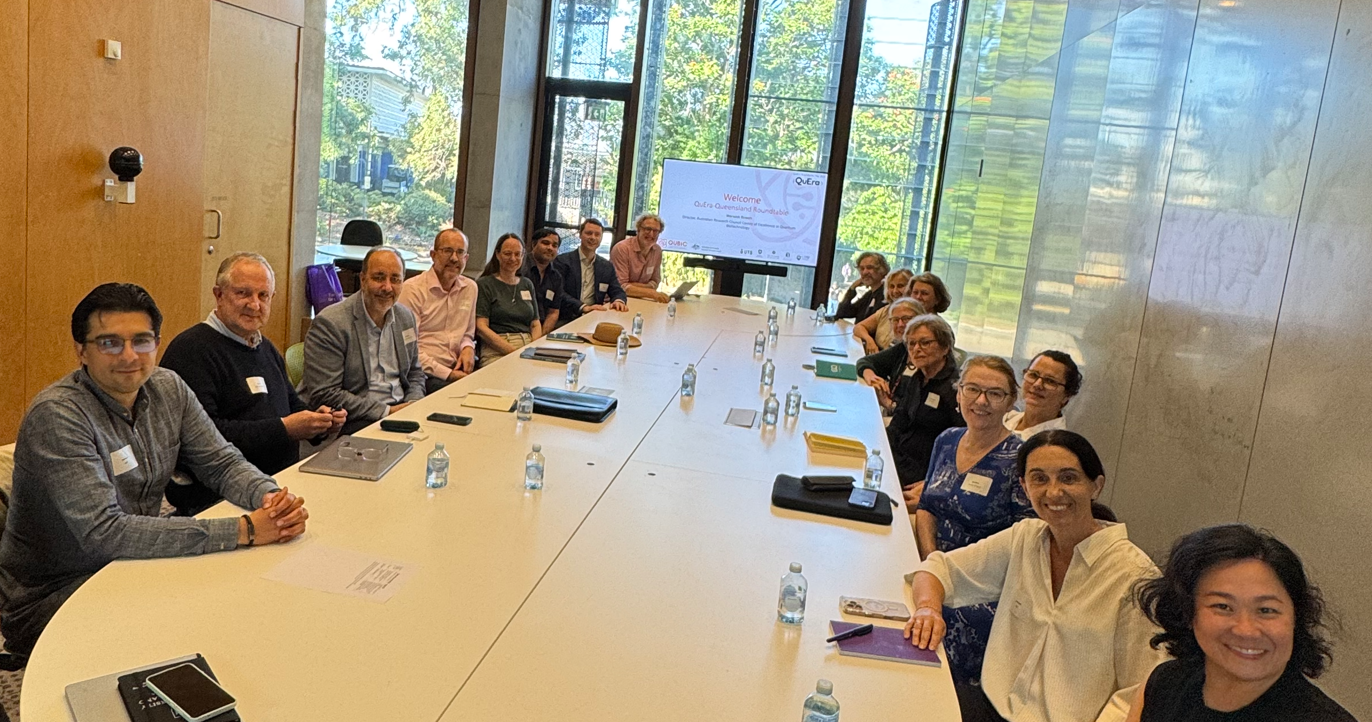
On Friday 1 May, QUBIC hosted a roundtable bringing together researchers, industry partners, and government representatives to explore how quantum computing could accelerate drug discovery and life sciences research in Queensland and beyond.

The event, held at the Global Change Institute Building at The University of Queensland, was convened in partnership with QuEra Computing Inc. — a global leader in neutral-atom quantum computing with a growing portfolio of pharmaceutical and biomedical research collaborations. Attendees represented a cross-section of Queensland’s quantum ecosystem, including researchers from the University of Queensland and Griffith University, representatives from Queensland Government’s Department of the Environment, Tourism, Science and Innovation (DETSI), and industry partners including Sanofi and IBM.

The session was designed to surface shared research interests and identify concrete pathways for collaboration at the intersection of quantum computing and life sciences — from molecular simulation and reaction dynamics to drug discovery pipelines and antimicrobial resistance.

QUBIC Director Professor Warwick Bowen reflected on the quality of the discussion: “It was a pleasure to host the roundtable between QuEra and the Queensland quantum algorithms, molecular simulations and pharma communities. I think we established a strong base on which to build meaningful collaborations.”

Tommaso Macri, Senior Director of Business Development at QuEra Computing Inc., noted the depth of the technical exchange: “What stood out was how concrete the conversation became. The group quickly moved toward specific scientific problems in molecular simulation, reaction dynamics, and drug discovery. They discussed where current methods fall short and explored where QuEra’s capabilities in neutral-atom quantum simulation, error-corrected systems, and application co-design could add value. That is the kind of grounded dialogue we need to identify collaborations worth pursuing.”

For Helen Burns of IBM, the energy in the room was equally striking: “The highlight was seeing the desire from industry, the state sector, and the academic community to close the gap between what was unknown in science and what could be explored through quantum computing — and the desire to keep talking and learning about deep pockets of scientific expertise and the possibilities quantum computing offers.”

The roundtable marks the beginning of an ongoing collaborative process to work towards identifying high-impact problems in pharmaceutical research where quantum computing can deliver a meaningful advantage — and to map the partnerships and funding mechanisms needed to pursue them.

Applying Quantum to the Brain Frontier

QUBIC CI Professor Marta Garrido brings expertise and infrastructure to enable next-generation quantum-enabled brain measurement.

The appointment of Professor Marta Garrido to QUBIC in 2025 marks a significant step in expanding the Centre’s multidisciplinary capability and strengthening its leadership in quantum-enabled biotechnology.

Her expertise in neuroscience and computational modelling brings new capability at the intersection of physics, engineering and biological research, supporting QUBIC’s future work in quantum-enabled human brain imaging.

Professor Garrido’s research combines brain imaging techniques and computational modelling to understand how the brain learns from experience and makes decisions in both typical individuals and people with psychiatric disorders. Her work uses methods including magnetoencephalography (MEG), electroencephalography (EEG), and magnetic resonance imaging (MRI) to study brain activity and neural circuitry. This research focuses on understanding the biological basis of brain function and psychiatric conditions, including disrupted predictive processes and brain circuitry.

Professor Garrido significantly expands QUBIC’s capability in magnetoencephalography.

She brings more than twenty years of experience in MEG data acquisition, analysis and brain connectivity modelling. In 2024, she established the first purpose-built whole- head, room-temperature MEG facility in the southern hemisphere at the University of Melbourne through an ARC LIEF grant. The facility uses wearable optically pumped magnetometers (OPMs) – 50 highly sensitive quantum magnetic field detectors – to measure extremely weak magnetic signals generated by brain activity. These sensors can be positioned flexibly on the head and allow recordings during more ‘natural’ experimental conditions where people can freely move.

This facility provides infrastructure to support QUBIC’s research in quantum-enabled neural imaging. In 2025, the University of Queensland also committed $1.6M to establish an R&D facility for quantum MEG. These two facilities combined means QUBIC has the southern hemisphere’s only room-temperature MEG facilities. Professor Garrido’s work contributes to informing the development of quantum sensors for MEG, benchmarking emerging sensing technologies including rubidium, diamond and optomechanical systems, and validating new approaches to non-invasive brain measurement. Her expertise in MEG data acquisition and analysis supports the development and testing of sensing technologies under development within QUBIC and contributes to research on brain connectivity and neural activity.

Her appointment also supports collaboration across QUBIC nodes. Project funding associated with this work enables the appointment of a postdoctoral research fellow in whole-brain MEG and will support MEG research at the University of Melbourne, University of Wollongong and The University of Queensland. Professor Garrido also brings experience in mentoring researchers, supporting training and development programs, established industry connections, and from 2026 will lead the QUBIC’s Outreach & Engagement portfolio.

Professor Garrido’s appointment strengthens QUBIC’s capacity to integrate quantum sensing technologies with biological and clinical research, expanding the Centre’s multidisciplinary capability and supporting collaboration across its research nodes. By contributing new infrastructure, technical expertise and research networks, her appointment enhances QUBIC’s ability to develop and apply quantum technologies for brain measurement and builds the foundation for future research and partnerships.


An extract from the 2025 QUBIC Annual Report. Read the full report here.
Reshaping How Scientists Explore the Physical Behaviour of Living Systems

Optical trapping and manipulation, which is the use of precisely shaped laser beams to hold, rotate, and measure microscopic structures, is reshaping how scientists explore the physical behaviour of living systems. These light‑driven tools allow researchers to quantify forces, observe rapid motions, and detect subtle mechanical changes inside cells at extremely small scales. Many of these measurements were previously out of reach, yet they are crucial for understanding how cells function, adapt and respond to stress or disease triggers. 

At The University of Queensland, the Rubinsztein‑Dunlop lab is at the forefront of this work. Dr Mark Watson is one of the researchers expanding what optical tweezers can do, having recently completed his PhD, Mark is continuing to advance the methods. His specialty lies in rotational and ballistic optical tweezers, which are platforms that can track the rotation of microscopic probes at exceptionally high speeds. These techniques allow scientists to capture dynamic processes in cell‑like environments on millisecond timescales, revealing biological activity that happens too quickly for many conventional tools to detect.

A major focus of Mark’s research is improving how we measure the physical properties of tiny biological environments. Using rotational optical tweezers he has developed targeted approaches to measure the fluid properties within cells by using light to control and twist a microscopic spherical probe. These measurements reveal physical signatures that provide clues about how cells move, change shape and perform their functions. Mark’s published studies show these tools in action in living cells and soft biological materials, highlighting their potential to uncover early signs of changes linked to health or disease.

Mechanical properties inside cells, such as viscosity, stiffness and force transmission, are central to processes including cell division, development, immune responses and disease progression. Tools that can measure these properties directly and in real time give scientists a window into how life operates at the smallest scales. Mark’s work enables exactly this – fast, sensitive and minimally disruptive measurements that can capture the physical “early warning signs” of how a cell is changing. These capabilities are essential for studying disease mechanisms, testing drugs and uncovering how subtle physical shifts influence biological behaviour.

As QUBIC develops quantum‑enhanced sensing and imaging technologies, high‑precision optical trapping systems will form a vital bridge between classical photonics and emerging quantum tools. Mark’s improvements to stability, bandwidth and calibration help ensure these platforms are ready for integration with quantum light sources and quantum‑enabled readouts, future techniques that promise to reveal biological processes with unprecedented sensitivity.

Continuing as a postdoctoral researcher in the Rubinsztein‑Dunlop lab, Mark is now extending his work into new regimes where optical manipulation is combined with faster detection, new forms of structured light and emerging approaches from quantum photonics. The application of his research is guided by close collaboration with cell biologists across QUBIC to determine which biological problems to tackle and what further developments are needed. These developments will contribute directly to QUBIC’s mission to create the next generation of precision tools for understanding life at its most fundamental scales.

Scientia Professor Michelle Simmons AC appointed Companion of the Order of Australia

QUBIC congratulates Scientia Professor Michelle Simmons AC, Advisory Board member, on her appointment as a Companion of the Order of Australia (AC) – the nation’s highest civilian honour.

Professor Simmons received the award “for eminent service to quantum physics and nanotechnology research, to atomic-scale engineering, to technology innovation and commercialisation, and to STEM education.”

An internationally recognised leader in atomic‑scale electronics, Professor Simmons has pioneered techniques that allow devices to be engineered with atom‑by‑atom precision in silicon. Her team has achieved a series of world‑firsts: the smallest transistor, the narrowest conducting wires, 3D atomic electronics, and the first two‑qubit gate using atom‑based qubits in silicon. These breakthroughs underpin emerging silicon‑based quantum computers and have positioned Australia as a global trailblazer in quantum technology.

As Director of the ARC Centre of Excellence for Quantum Computation and Communication Technology and Founder & CEO of Silicon Quantum Computing, Professor Simmons has combined fundamental research excellence with a strong commitment to commercialisation and national capability building.

“Professor Simmons’ recognition as a Companion of the Order of Australia is a testament to her vision and leadership in shaping Australia’s quantum future. We are fortunate to have her insight on the QUBIC Advisory Board, where her deep expertise helps guide our mission to translate quantum technologies into real impact for biotechnology, health, and society.”
– Professor Warwick Bowen, Director, QUBIC

Professor Simmons’ appointment as AC highlights not only her scientific leadership, but also her role in shaping a strong, forward‑looking quantum ecosystem in Australia.

QUBIC is honoured to have her expertise and strategic vision informing our mission to advance quantum biotechnology for societal benefit.

Quantum meets neuroscience in the fight against MND

In a lab in Wollongong, researchers are combining neuroscience and quantum physics to tackle one of medicine’s most devastating conditions: motor neurone disease (MND) – a group of progressive neurological disorders that affects the nerve cells controlling voluntary muscle movement, leading to weakness, paralysis, and respiratory failure.

Dr Dzung Do-Ha, based in the Ooi lab, is leading the research that uses quantum diamond sensing to peer into the workings of patient-derived neuronal cultures – a kind of ‘disease-in-a-dish’ model sometimes nicknamed ‘tiny brains in a dish” – to better understand motor neurone disease (MND). A neuroscientist by training, she’s now working at the cutting edge of quantum biotechnology.

Dzung’s background is in biology and neuroscience, but her current work sits at the intersection of life sciences and quantum technologies. Through QUBIC, she’s collaborating closely with Dr Dan McCloskey at the University of Melbourne, bringing together expertise in quantum sensing and neurobiology. This kind of cross-disciplinary research is central to QUBIC’s mission: to apply quantum tools to real-world biological problems.

Diamond voltage imaging microscopy (DVIM) is a technique that uses nitrogen-vacancy (NV) centres in lab grown diamonds to detect magnetic fields and voltage changes at extremely small scales. These sensors can pick up the faint electrical signals generated by neural activity in neuronal cultures, offering a non-invasive way to study how neurons behave and interact. This is especially valuable in MND research, where understanding early changes in neural function could lead to better diagnostics and treatments.

Using patient-derived iPSC neurons – mini ‘avatars’ of each person’s nervous system – provide a powerful model for studying disease in a controlled environment. By combining them with quantum sensors, Dzung’s team can observe neural dynamics with a level of detail that traditional methods can’t. This approach could help detect early changes in neural activity before symptoms appear, identify biomarkers for diagnosis and monitoring, and provide a platform for testing potential therapies, all without needing to access human brain tissue.

This research is unfolding during the International Year of Quantum Science and Technology 2025, a global initiative highlighting the growing impact of quantum technologies. Dzung’s work shows how quantum sensing is moving beyond physics labs and into applications that could transform healthcare. It’s a solid example of how quantum tools can help answer biological questions that were previously out of reach.

With QUBIC’s support and the collaboration between the Ooi and Simpson labs, Dzung’s research is part of a broader movement to bring quantum technologies into the life sciences. QUBIC hosted the first International Conference on Quantum Technologies in the Life Sciences in November in Wollongong, showcasing how interdisciplinary science can drive innovation.

Dr Dzung Do-Ha is helping to build a future where quantum tools are part of everyday biomedical research. Her work on MND is not only advancing our understanding of the disease but also showing what’s possible when neuroscience and quantum physics come together to solve real-world problems.

In 2025, Dzung was recognised as an emerging leader in quantum biotechnology, being awarded the QUBIC Rising Star Award for advancing QUBIC’s vision by bridging quantum sensing with neurodegenerative research.

QUBIC Chief Investigator Dr Elizabeth Hinde Recognised for Research Leadership and Excellence

QUBIC is proud to celebrate two significant achievements by Chief Investigator Dr Elizabeth Hinde from the University of Melbourne – recognition that highlights her leadership in biophysics and her role in shaping Australia’s research future.

International Recognition in Biophysics
Elizabeth has been honoured by the Biophysical Society with the Michael and Kate Bárány Award for her exceptional contributions to understanding genome function through advanced imaging. Her research explores how the architecture of the cell nucleus influences gene expression, replication, and repair. By combining fluorescence microscopy, spectroscopy, and live-cell imaging, Liz reveals how chromatin, the 3D structure that packages our DNA, rearranges in real time.

Her pioneering imaging methods not only advance biophysics but also lay the foundation for quantum-enhanced bioimaging, an area central to QUBIC’s mission to transform life sciences with quantum technologies.

Appointment to ARC College of Experts
Elizabeth has also been appointed to the Australian Research Council’s College of Experts, a prestigious role that plays a critical part in identifying research excellence and shaping national priorities to advance knowledge and drive innovation.

Her appointment ensures that interdisciplinary research, including quantum-enabled biotechnology, has a strong voice in Australia’s research future. It reflects Liz’s standing as an expert of international reputation and reinforces QUBIC’s leadership in bridging physics, biology, and quantum technologies.

Liz’s achievements demonstrate the power of interdisciplinary science and its role in shaping the future of health and life sciences. Congratulations, Liz, on these outstanding achievements!